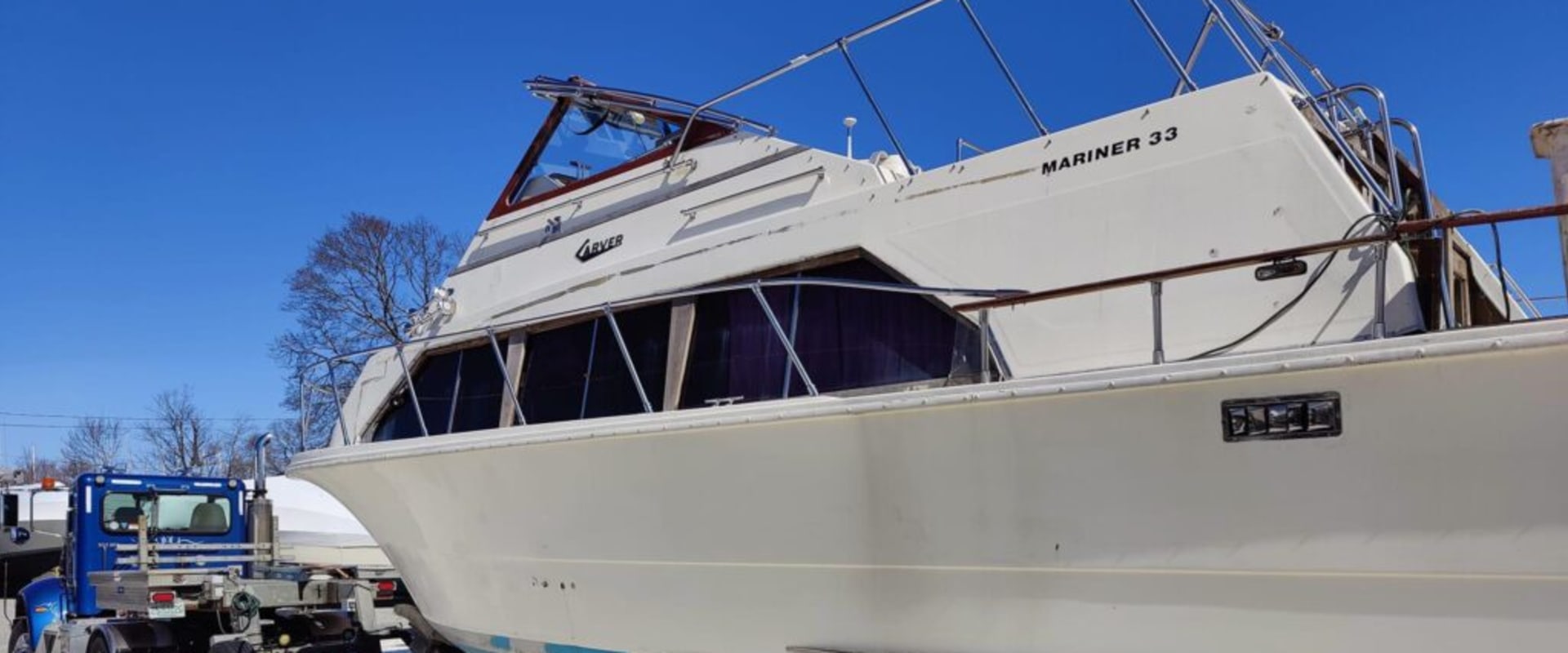
We've seen this pattern thousands of times at Jiffy Junk. Most customers don't call when the boat first stops running. They call when the marina threatens fees, the neighbor complains, a property sale gets complicated, or the county sends a notice. By then, a simple removal has usually turned into a more expensive, more complex project — because every year a boat sits untouched, the fiberglass deteriorates, fluids leak, and trailers rust into the ground.
The moment your vessel stops being an asset and starts being a problem is the moment to act. Below, we break down when a boat removal service is the right solution, the warning signs we see most often on the job, and what years of experience have taught us about the real cost of waiting.
TL;DR Quick Answers
What Is Boat Removal Service?
Boat removal service is the professional removal and responsible disposal of unwanted, damaged, abandoned, or end-of-life vessels from private property, driveways, backyards, marinas, and waterways.
What we've learned after thousands of removals:
Most boat owners don't need this service until they do — and by then, the vessel has usually been sitting for years
Every boat contains hazardous materials — fuel, oil, coolant, batteries, anti-fouling paint — that require proper handling under the Clean Water Act and Oil Pollution Act
The longer a vessel sits, the more it costs to remove. Hulls crack. Fluids leak. Trailers rust into the ground. A simple job becomes a complex one
A professional boat removal service handles everything:
Assessment of vessel size, condition, and access
Safe extraction from any location — driveways, backyards, tight spaces, waterfront
Hazardous material removal and legal disposal
Recycling of metals, engines, and trailers through certified facilities
Proper processing of fiberglass hulls that can't enter standard waste streams
Complete site cleanup after removal
The bottom line: If your boat isn't going back on the water, professional removal is the fastest, safest, and most cost-effective way to get it out of your life — before deterioration turns a straightforward job into an expensive one.
Top Takeaways
Waiting is the most expensive decision you can make. Every vessel that sits for more than a year costs significantly more to remove. Hulls crack. Fluids leak. Trailers rust into the ground. A two-hour job becomes a full-day project. Federal data confirms the same pattern at scale — NOAA spent millions cleaning up vessels that started as simple removals nobody got around to
The boat disposal system in America is broken — and you shouldn't have to navigate it alone. There's no national recycling program. No trade-in infrastructure. No clear path from "I'm done with this boat" to "the boat is gone." Most customers have already tried selling, donating, and calling other haulers before they reach us. Professional removal exists because the system failed to create a better option
Every boat contains hazardous materials that require proper handling. Fuel. Oil. Coolant. Lead-acid batteries. Anti-fouling paint. All governed by federal law under the Clean Water Act and Oil Pollution Act. Improper disposal isn't just irresponsible — it's illegal. This isn't a DIY job for a reason
If the boat isn't going back on the water, that's your signal. You don't need a code violation, a fine, or a property sale deadline to justify removal. The moment you know the vessel is done, the smartest move — financially, legally, and environmentally — is to pick up the phone and schedule the job
Your Boat Has Been Sitting for More Than a Year
This is the single most common scenario we walk into. The boat stopped being used one summer, then another summer passed, and before the owner realized it, three or four years had gone by. What we've learned is that a vessel sitting idle for more than 12 months is almost always heading toward a more difficult removal.
Here's what happens during that time:
Fiberglass hulls develop cracks that allow moisture intrusion and structural weakening
Fuel and oil break down and begin leaking into the bilge or surrounding ground
Trailer tires dry rot and frames rust — sometimes fusing to the surface underneath
Animals nest inside the cabin, engine compartment, and hull cavities
Vegetation grows around and sometimes through the vessel
Every one of these issues adds time, complexity, and cost to the eventual removal. The boat you could have removed in two hours last year might take a full day next year. We've seen it happen hundreds of times.
You're Facing Fines, Fees, or Legal Pressure
Many of our customers don't call because they want to — they call because they have to. Local code enforcement issued a notice. The HOA sent a warning letter. The marina is charging storage fees on a vessel that hasn't left the slip in years. In some cases, a property sale is stalling because the buyer's inspector flagged the vessel as a liability.
These situations all share one thing in common: a deadline. And deadlines change the math. When you're facing daily marina fees, accumulating fines, or a closing date that won't move, the cost of professional removal is almost always less than the cost of continued inaction.
Federal law under 33 CFR Part 245 places primary removal responsibility on the vessel owner. State and local regulations add additional layers of liability. Waiting until enforcement escalates doesn't make the problem cheaper — it makes it urgent and more expensive.
The Boat Can't Be Sold, Donated, or Repaired
This is the reality check moment most boat owners eventually reach. They've tried listing it for sale with no serious interest. Donation programs rejected it because it isn't seaworthy. A marine mechanic quoted repairs that exceed the vessel's value. At this point, the only realistic path forward is professional removal and disposal.
We talk to customers in this situation every week. They've spent months — sometimes years — exploring alternatives before accepting that the boat needs to go. Here's what we tell them:
If no one will buy it at any price, the market has told you its value
If donation programs won't accept it, the vessel has crossed a condition threshold that only gets worse
If repair costs exceed the boat's worth, further investment doesn't make financial sense
Reaching this conclusion isn't a failure. It's a practical decision — and the sooner it's made, the less the eventual removal costs.
The Vessel Is Creating an Environmental Risk
Boats contain hazardous materials that pose real environmental threats when left unmanaged. Fuel degrades and leaks. Engine oil seeps into soil and groundwater. Lead-acid batteries corrode. Anti-fouling paint on the hull releases toxic compounds as it deteriorates.
We've arrived at jobs where the ground around the vessel was visibly stained from years of slow fluid leaks. In waterway situations, we've seen fuel sheens spreading from vessels that owners assumed were "fine because they're still floating." They weren't fine.
The EPA requires proper handling and disposal of these materials. NOAA has documented the environmental damage abandoned vessels cause to sensitive marine habitats, navigation channels, and surrounding ecosystems. Once contamination reaches soil or water, you're no longer dealing with a removal — you're dealing with remediation, which is a significantly more expensive problem.
Professional removal before environmental damage occurs protects your property during a bathroom remodel, your neighbors, your local waterways, and your wallet.
You Inherited a Boat You Don't Want
Estate situations are among the most emotionally complicated removals we handle. A family member has passed, and somewhere on the property — in a backyard, a storage unit, a driveway, or a marina slip — there's a boat that nobody in the family wants or knows what to do with.
These vessels often haven't been maintained in years. Registration has lapsed. The title may be unclear. And the family is already managing the stress of settling an estate without adding a vessel disposal project on top of it.
What we tell families in this situation:
We don't need the boat to be in any particular condition
Title issues can usually be navigated — we can walk you through the process
We handle every aspect of the physical removal so you can focus on what matters
The sooner the vessel is removed, the sooner the property can be sold, cleared, or repurposed
We approach these jobs with extra care because we understand what families are going through. It's never just about the boat.
You're Preparing a Property for Sale
Real estate agents call us regularly. A listing is about to go live and there's an old boat in the driveway, side yard, or on a trailer behind the garage. It's dragging down curb appeal, raising questions from prospective buyers, and in some cases creating inspection issues related to environmental liability.
What we've seen in these situations:
Boats on a property signal deferred maintenance to buyers
Vessels with visible deterioration raise environmental concern flags during inspections
Removing the boat before listing eliminates a negotiation point that could cost you more than the removal itself
The turnaround on these jobs is usually fast. A single visit, a few hours of work, and the property presents clean and clear. For the cost of a standard junk removal service, you've eliminated a liability that could have reduced your sale price by thousands.
How to Know It's Time — A Quick Checklist
If any of the following apply to your situation, professional removal is likely your best next step:
The boat hasn't been used in over a year
Registration or insurance has lapsed
Repair costs exceed the vessel's current value
No buyer or donation program will accept it
You're receiving fines, fees, or legal notices
The vessel is showing visible deterioration — cracking, rust, soft spots
Fluids are leaking onto the ground or into water
You're settling an estate or preparing a property for sale
The boat is blocking usable space you need back
You've been saying "I'll deal with it next month" for more than six months
If you checked even one of those boxes, the math favors acting now. Every month of delay adds cost and complexity — and we've never once had a customer tell us they wished they'd waited longer.
"After years of removing boats from every situation imaginable — backyards, marina slips, properties mid-sale, estates where families are already overwhelmed — the one thing I can tell you is that timing is everything. The customers who call early get a straightforward removal at a fair price. The customers who wait three or four years end up paying significantly more because the fiberglass has cracked, the fluids have leaked, and the trailer has rusted into the ground. We've never once had someone tell us they wished they'd waited longer. Not once. If the boat isn't moving and you've run out of options to sell, donate, or repair it, that's your signal. The best time to handle it is right now — before a code violation, an environmental issue, or a property sale forces your hand and turns a simple job into an urgent one."
Essential Resources
Deciding when to remove a boat usually means you've already spent time looking into options that didn't pan out. We talk to customers every day who've been through it — the donation rejections, the unreturned calls from haulers, the overwhelming regulations. These seven resources are the ones we point people to most often because they give you real answers from sources you can trust. Consider this your reference guide as you work through the decision.
1. Discover What Removal Programs and Contacts Exist in Your State
NOAA Marine Debris Program — Abandoned and Derelict Vessels Info Hub
Every state handles vessel disposal differently — different programs, different rules, different funding. NOAA's interactive database is the single best place to find what's actually available where you live, including local agency contacts and active removal programs. We recommend starting here before anything else.
Resource URL: https://marinedebris.noaa.gov/resources/abandoned-and-derelict-vessels-info-hub
Source Type: Federal Government Agency
2. Learn What Environmental Steps Are Required Before Any Boat Is Disposed Of
U.S. EPA — Disposal of Vessels at Sea
Boats carry fuel, oil, batteries, and other materials that can't just go to a landfill. The EPA spells out exactly what needs to be removed, how it needs to be handled, and why fiberglass vessels require special disposal. Any legitimate removal company should be following these guidelines on every single job — and now you'll know what to look for.
Resource URL: https://www.epa.gov/ocean-dumping/disposal-vessels-sea
Source Type: Federal Government Agency
3. Understand How Boat Donation Tax Deductions Actually Work
IRS Publication 4303 — A Donor's Guide to Vehicle Donations
Thinking about donating your boat instead of having it removed? This official IRS guide covers the real rules around deductions for vessels valued over $500 — including Form 1098-C requirements, fair market value determination, and what actually qualifies. We recommend reading it before committing to any donation program. Most customers we talk to are surprised by how many boats get rejected.
Resource URL: https://www.irs.gov/pub/irs-pdf/p4303.pdf
Source Type: Federal Government Agency
4. See Why Fiberglass Boat Disposal Is More Complicated Than Most Owners Expect
NOAA Marine Debris Program — Building a Fiberglass Boat Recycling Program
Roughly 200,000 boats reach end-of-life status every year in the U.S., and the majority have fiberglass hulls that can't go into standard recycling streams. This resource explains why disposal is so difficult, what pilot recycling programs are doing about it, and why the cost of getting rid of a fiberglass hull is higher than most people anticipate. If you've been wondering why this isn't simpler — this is the answer.
Resource URL: https://marinedebris.noaa.gov/prevention/building-fiberglass-boat-recycling-program
Source Type: Federal Government Agency
5. Get Clear on Hazardous Material Handling and Disposal Requirements
BoatUS Foundation — Disposal of Toxic Waste
From used oil to corroded batteries to anti-fouling paint, boats carry more hazardous material than most owners realize. This guide breaks down federal disposal requirements in plain language — including what's illegal to discharge under the Oil Pollution Act and the Clean Water Act. Whether you're handling prep yourself or hiring a professional service like Jiffy Junk, knowing what's involved helps you ask the right questions and avoid surprises.
Resource URL: https://boatus.org/study-guide/environment/disposal
Source Type: Nonprofit Organization (501c3)
6. Know Your Legal Obligations Under Federal Wreck Removal Regulations
33 CFR Part 245 — Removal of Wrecks and Other Obstructions
Here's something most boat owners don't realize: federal law places primary removal responsibility on the vessel owner. This Code of Federal Regulations resource spells out owner liability, how abandonment is legally determined, and the enforcement roles of the U.S. Army Corps of Engineers and Coast Guard. It's not light reading — but it's important reading if you're trying to understand where you stand and what happens if you wait too long.
Resource URL: https://www.ecfr.gov/current/title-33/chapter-II/part-245
Source Type: Federal Government Regulation
7. Understand Why Abandoned Boats Are a Growing Problem Nationwide
NOAA Marine Debris Program — Abandoned and Derelict Vessels
We see it on nearly every job — boats that sat too long become environmental hazards, navigation risks, and legal liabilities far more expensive than early removal would have been. NOAA's overview documents the full scope of the crisis, the federal grant programs funding removal efforts, and why the problem keeps growing year after year. If you're on the fence about acting now versus waiting, this makes the math very clear.
Resource URL: https://marinedebris.noaa.gov/what-marine-debris/abandoned-and-derelict-vessels
Source Type: Federal Government Agency
Rather skip the research and talk to someone who does this every day? We get it — not everyone has time to navigate regulations, chase down state programs, or coordinate multiple vendors.
Supporting Statistics
What We See on the Ground — and What the Federal Data Confirms
We don't need government reports to know boat disposal is a growing crisis. We see it in every job. But when federal agencies commit tens of millions to the same problem we're solving in driveways and backyards across the country, it confirms what we've been telling customers for years: this is bigger than most people realize — and waiting only makes it worse.
One State. One Hundred Vessels. 3.6 Million Pounds of Debris.
The data: NOAA reports that nearly 100 abandoned vessels have been removed from North Carolina's coast since 2019 — producing 1,800 tons (3.6 million pounds) of debris from coastal waters and habitats.
What that number actually looks like on the ground:
We've arrived to "one small boat" jobs that turned into debris fields — hull split into sections, trailer rusted into the soil, cabin pooled with old fuel and corroded battery acid
A vessel doesn't sit quietly. It breaks down, spreads out, and contaminates the space around it
Customers who call early get a clean, contained removal. Customers who wait end up with jobs that look a lot like what NOAA spent millions cleaning up along the Carolina coast
The detail that doesn't show up in the data: Newly abandoned vessels keep appearing — not just from hurricanes, but from owners who ran out of options and walked away. That cycle doesn't stop unless someone breaks it.
Source: NOAA Marine Debris Program
$69 Million in Federal Funding for a Problem We Handle Every Day
The data: Through Fiscal Years 2022–2023, NOAA awarded over $69 million across 14 marine debris removal projects under the Bipartisan Infrastructure Law. Abandoned vessel removal was named a top priority.
What most boat owners don't consider:
$69 million doesn't get allocated to a problem that's manageable
Vessel abandonment has outpaced every existing system designed to prevent it
State programs are underfunded. Donation organizations reject boats that aren't seaworthy. Marinas don't want the liability. Haulers who quote low either never show up or triple the price on arrival
What our customers tell us: By the time most people call Jiffy Junk, they've already spent weeks trying other routes that went nowhere. The $69 million confirms what we hear in those first phone calls — the system is broken, and owners are left figuring it out alone.
The difference between a federal cleanup project and a clean removal? Usually just timing. The boats we remove on a Tuesday afternoon are the same boats that become million-dollar government problems when they sit for five more years.
Source: NOAA Marine Debris Program
$7.4 Million Across 8 States and Territories — Same Story Everywhere
The data: In July 2025, the BoatUS Foundation and NOAA announced nearly $7.4 million in federal grants for 10 vessel removal projects in Alaska, Guam, Louisiana, Maine, North Carolina, Oregon, Washington, and the U.S. Virgin Islands.
What jumped out to us immediately:
The geography couldn't be more different — bayous, Arctic coastlines, tropical harbors, lobstering waters — but the story is identical every time
One Louisiana parish received $1 million to remove over 150 abandoned boats from its bayous alone
One Alaska project is spending $851,000 to remove just seven vessels — including a 100-foot metal barge abandoned over a decade ago
That barge didn't start as a $121,000 problem. It started as a boat someone didn't know what to do with
The pattern — at the federal level and in our customers' backyards:
Owner can't afford repairs or marina fees
Selling isn't realistic. No buyer wants an aging vessel
Donation programs reject anything that isn't seaworthy
Owner walks away
Vessel deteriorates for years
What was once a simple removal becomes an expensive, multi-agency project
We've seen this play out thousands of times on a smaller scale. The customer who says, "I've been meaning to deal with this for a few years." Those few years turned a two-hour job into a full-day project — cracked hull, fluids in the ground, trailer wheels buried in rust and dirt. The Alaska barge is the same story with more zeros.
Source: NOAA Marine Debris Program
Why We Keep Sharing These Numbers
We're not a government agency or a policy organization. We're the team that shows up and gets your boat out of your life — professionally, responsibly, and on your schedule.
But we share these statistics because they answer the question we hear most often: "Is it really worth dealing with this now?"
The federal data makes the answer clear:
Waiting doesn't reduce cost — it multiplies it
Waiting doesn't make the boat disappear — it makes the boat a bigger problem for you, your neighbors, and your local waterways
Every vessel we remove early is one that never ends up in a government database, never leaks hazardous material into someone's yard, and never costs ten times what it should have
Final Thoughts & Opinion
Our Take: The Best Time to Remove a Boat Is Before You Have To
We've removed thousands of vessels across the country. Pristine marinas. Overgrown backyards. Properties mid-sale. Estates where families were already overwhelmed.
Every job reinforces the same opinion we share with every customer who calls:
The right time to remove your boat is the moment you realize it's not going back on the water.
Not next season. Not when you "get around to it." Not when the code enforcement notice arrives. Right now — while the job is still simple.
What We Wish Every Boat Owner Knew
Most calls follow the same arc. Someone bought a boat with great intentions. Life changed. The boat sat. Now they're staring at a vessel they can't sell, can't donate, can't afford to repair, and don't know how to get rid of.
Here's what we've learned from being on the other end of those calls:
The boat disposal system in America is fundamentally broken. No trade-in program. No national recycling infrastructure. No clear path from "I'm done with this boat" to "the boat is gone." The industry made buying easy and left owners completely on their own when it's time to let go
Most people have already tried everything before they call us. The marina. Donation programs. Free listings on Craigslist. Haulers who never showed up. By the time they reach Jiffy Junk, they're not shopping — they're exhausted
The emotional weight is real. A boat sitting in your yard for years isn't just a physical problem. It's a daily reminder of something unfinished. Customers tell us the relief isn't just about the space — it's about finally closing the chapter
Why "Professional" Boat Removal Matters More Than People Think
We hear it occasionally: "Why would I pay someone when I could figure it out myself?"
The honest answer based on what we see in the field:
Hazardous materials are almost always involved. Fuel, oil, coolant, batteries, anti-fouling paint. The Oil Pollution Act and Clean Water Act govern how these must be handled. Improper disposal isn't just irresponsible — it's illegal
Fiberglass doesn't go in the dumpster. Roughly 200,000 boats reach end-of-life annually. Most have fiberglass hulls that can't enter standard waste streams. NOAA has spent years and millions of dollars researching responsible disposal. It's not a weekend project
The physical risk is significant. Boats are heavy, awkward, and often structurally compromised. We've seen DIY attempts end with damaged driveways, downed fences, injured backs, and boats halfway onto a trailer before everything went sideways
Abandonment carries legal liability. Federal regulations under 33 CFR Part 245 place primary removal responsibility on the owner. Walking away doesn't erase your obligation — it creates a legal one
Professional removal isn't a luxury. It's the responsible path for your property, your community, and the environment.
The One Thing We'd Change About This Industry
Boat owners shouldn't have to become experts in environmental regulations, federal tax law, and hazardous waste disposal just to get rid of a vessel they no longer want.
Reading IRS Publication 4303. Cross-referencing EPA ocean dumping guidelines. Checking state vessel turn-in programs. Researching fiberglass recycling feasibility reports. The fact that all of this is necessary just to understand your options tells you where the system has failed.
We built our service to be the opposite of that experience:
One call. Not six agencies, three voicemails, and a stack of paperwork
One price. Transparent, upfront, no surprises — the quote is the quote
One team. Licensed, insured, equipped, and trained for every aspect of the job
One visit. We show up, do the work, and leave your space clean. Done
Where We Stand
Every statistic in this article points to the same conclusion. Boat disposal in America is a growing problem the existing infrastructure can't keep up with.
200,000 vessels reaching end-of-life annually
Over $69 million in federal funding committed because communities can't handle the backlog
Millions of pounds of debris pulled from a single state's coastline
And the number keeps climbing
We got into this work because people deserve better than being left alone with a problem they didn't plan for. Nobody buys a boat thinking about disposal day. But that day comes — and when it does, the owner deserves:
Straight answers instead of a runaround
A company that shows up when it says it will
A team that handles the vessel properly — recycling what can be recycled, disposing of hazardous materials by regulation, and leaving the property clean
A price that's fair, honest, and final
That's what we've built at Jiffy Junk. Same White Glove Treatment we bring to estate cleanouts, basement clearing, and every other job. The size of the item changes. The standard doesn't.
If your boat isn't going back on the water, don't let it sit another season. The data is clear. The experience is clear. The path forward is simple.
FAQ on Boat Removal Service
Q: How much does boat removal service cost?
A: Every job is different — and we mean that literally. A 14-foot aluminum boat on a flat driveway is a completely different project than a 28-foot fiberglass cabin cruiser wedged behind a fence with no gate access. We've priced both in the same week.
The biggest cost factors we see:
Vessel size and weight
Structural condition and deterioration level
Fluid contamination inside the hull
Trailer status — functional, rusted, or fused to the ground
Equipment accessibility to the boat's location
Customers who call early — before deterioration sets in — almost always pay less.
Call 844-JIFFY-JUNK or book at jiffyjunk.com/booking for a free quote. One price. No hidden fees. No surprises on removal day.
Q: What types of boats can a professional removal service handle?
A: If it's a boat and you want it gone, we can handle it.
Sailboats
Motorboats
Pontoon boats
Fishing boats
Jet skis
Canoes and kayaks
Personal watercraft
Boat trailers, outboard motors, and marine accessories
It doesn't need to run. It doesn't need to be intact. We've removed vessels with collapsed hulls, trailers rusted to the concrete, and cabins pooled with years of rainwater and corroded battery acid. Condition is never a dealbreaker. It just changes how we plan the job.
Q: What happens to my boat after it's removed?
A: This is a question more people should ask — and most removal companies won't answer clearly.
Our process follows federal guidelines under the Clean Water Act and Oil Pollution Act:
All fluids are drained and properly disposed of
Batteries and hazardous components are separated
Recyclable metals — engines, trailers, hardware — go to certified recyclers
Fiberglass hulls are processed through approved waste facilities since standard recycling streams can't accept them
Nothing gets dumped illegally. We've seen what happens when vessels are disposed of irresponsibly. It's exactly the kind of damage NOAA spends millions cleaning up.
Q: How long does boat removal take?
A: Most jobs are completed in a single visit. A small to mid-sized vessel on a functional trailer typically takes two to four hours.
What adds time is what we can't always see in photos:
Fluid contamination inside the hull
A trailer frame fused to the ground
Structural damage requiring careful extraction
Tight access that limits equipment options
Boats sitting for three or more years almost always take longer than boats addressed within the first year. We assess every job before we start and give you a clear timeline upfront.
Q: Do I need the title to have my boat removed?
A: Title requirements vary by state. Missing paperwork shouldn't stop you from making the call.
We regularly work with customers who:
Inherited vessels with no documentation
Bought boats years ago without a proper title transfer
Let registration lapse and never renewed
Purchased property with an abandoned boat already on it
Estate situations and abandoned vessels on newly bought property are some of our most common jobs. We'll walk you through what your state requires before removal day.
In our experience, the title question keeps people stuck longer than it should. More often than not, there's a clear path forward.