In real jobs, the biggest price changes typically come down to a few key factors: weight limits, debris type, rental time, and local landfill or transfer station fees. That’s why a project that looks small on the surface, like a bathroom refresh or garage cleanout, can end up costing more than expected if the debris is heavier than it appears (tile, drywall, flooring, plaster, dirt, or roofing materials).
This guide breaks down the most important factors that affect dumpster rental prices, including what’s commonly included in a quote, what triggers extra fees, and how to compare providers the right way. By the end, you’ll know exactly what to look for before booking, so you can avoid surprise charges, choose the most cost-effective option, and keep your project on budget.
TL;DR Quick Answers
Dumpster rental prices
Dumpster rental prices typically range from $250–$600, depending on dumpster size, debris weight, rental length, and local disposal fees.
At Jiffy Junk, we see the biggest price swings come from weight limits, not the dumpster itself. Heavy debris like tile, drywall, flooring, and roofing materials can exceed weight allowances fast and trigger overage fees, so always confirm the included tonnage before booking.
Top Takeaways
Dumpster pricing is not just about size. Weight, debris type, rental time, and local disposal fees matter.
Weight limits cause most surprise charges. Heavy debris adds up fast.
Prices vary by location. Landfill and transfer station fees differ by city and county.
Low quotes can hide extra fees. Always confirm weight allowance and overage charges.
The best value comes from clarity. Compare what is included, not just the base price.
Dumpster Rental Pricing in Simple Terms
Dumpster rental prices are not based on the container alone. Your quote usually covers the full cost of delivery, pickup, disposal, and weight processing. That is why two dumpsters that look identical can have very different prices depending on what you throw away and where you live.
At Jiffy Junk, we have seen the biggest pricing confusion happen when homeowners compare quotes without checking the details that control the final total, especially weight limits and local disposal fees.
1) Dumpster Size
Dumpster size is one of the clearest cost drivers. Larger dumpsters usually cost more because they require more hauling capacity and disposal space.
Common sizes and typical use cases:
10-yard for small cleanouts and light debris
15-yard for medium cleanouts and small remodels
20-yard for renovation projects and bulky debris
Even with size, the best value is not always the biggest dumpster. A larger dumpster with a low weight allowance can still lead to extra fees.
2) Debris Weight
Weight is one of the biggest factors in dumpster rental pricing. Most rentals include a set weight allowance. If your load exceeds it, you will likely pay an overage charge.
Heavy materials that raise cost quickly:
Tile and concrete
Dirt, gravel, and sod
Roofing shingles
Drywall and plaster
Flooring materials
From our experience at Jiffy Junk, homeowners often underestimate weight because debris can look light until it is loaded. This is why small renovation dumpsters sometimes cost more than larger cleanout dumpsters.
3) Type of Debris
Not all debris costs the same to dispose of. Some items are restricted or require special handling, which can raise pricing.
Materials that often affect cost:
Mattresses and box springs
Tires
Appliances
Paint, chemicals, and batteries
Electronics
If your project includes restricted items, always ask what is allowed before renting. This is one of the easiest ways to avoid unexpected charges.
4) Rental Period
Most dumpster rentals include a standard rental window, often around 7 to 10 days. Keeping the dumpster longer may result in additional daily charges.
Before booking, confirm:
included rental days
extension fees
early pickup options
5) Local Disposal Fees and Location
Dumpster rental prices can vary widely by city because landfill and transfer station fees vary widely by region. Areas with higher disposal costs typically have higher rental prices.
Location factors that impact pricing:
landfill tipping fees
distance to the disposal site
local regulations
city permitting requirements
This is why online averages help, but local quotes will always be the most accurate.
6) Delivery Access and Placement
Where you place the dumpster can impact pricing, especially if access is tight or placement requires extra planning.
Examples that may increase cost:
narrow driveways or steep inclines
gated communities with delivery restrictions
street placement requiring a permit
blocked access at pickup that can trigger a trip fee
A quick photo of the drop-off area can prevent delivery issues and extra charges.
Common Fees That Increase Dumpster Rental Costs
Even with a base quote, extra fees can raise the final price. The most common include:
overweight charges
extra-day rental fees
restricted item fees
trip fees due to blocked pickup or overfilled dumpsters
permit fees for street placement
At Jiffy Junk, we always recommend confirming the weight allowance and rental period in writing before booking. That is where most surprise charges come from.
How to Get the Best Price Without Cutting Corners
To keep pricing predictable, focus on the factors that cause cost spikes.
Smart ways to avoid overpaying:
choose the right dumpster size for your debris volume
ask about weight limits if you have heavy materials
confirm what is included in the quote
avoid overfilling the dumpster
schedule pickup before extension fees kick in
Final Takeaway
Dumpster rental prices are influenced by more than size. The biggest drivers are debris weight, debris type, rental length, and local disposal costs. When you understand these factors, you can compare quotes correctly, avoid surprise fees, and choose the best option for your project. The benefits of a bathroom remodel can also depend on planning cleanup properly, since debris removal costs can vary widely.
“From what we see every day at Jiffy Junk, dumpster rental pricing is rarely about the dumpster itself. The real cost comes down to what happens after pickup, especially weight limits, debris type, and local disposal fees. That’s why we always tell homeowners to compare quotes based on what’s included, not just the advertised price, because that’s where the surprise charges usually hide.”
Essential Resources
Dumpster rental pricing can look simple at first glance, but the real cost is usually in the details. These resources help you understand what drives the price, compare quotes the right way, and avoid the most common surprise fees we see homeowners run into.
1) Get a Quick National Price Baseline Before You Call Anyone
Use this guide to see typical dumpster rental price ranges by size, so you can spot an overpriced quote fast.
https://www.dumpsterrentalguide.com/pricing
2) Understand What Actually Changes Your Final Price
This breakdown explains the real pricing drivers like weight limits, overage fees, and rental time so you know what to ask before booking.
https://wastedoor.com/article/dumpster-rental-cost-guide
3) Check Real Disposal Fees That Affect Local Dumpster Costs
Disposal fees are one of the biggest reasons pricing varies by city. This county resource shows the actual fees that can impact your quote.
https://www.miamidade.gov/global/solidwaste/disposal-fees.page
4) Use State Fee Data to Understand Why Prices Vary by Region
This report gives county-level disposal fee information, helping you understand why a dumpster can cost more in one area than another.
https://floridadep.gov/sites/default/files/2023%20Florida%20Solid%20Waste%20Disposal%20Fees.pdf
5) See How Tipping Fees Change Even Within the Same State
This county tipping fee resource shows why two nearby areas can have totally different dumpster rental pricing.
https://ecology.wa.gov/getattachment/1e0e54cb-c903-46a0-a2c4-8267e851b68a/county-tipping-fees-map-2023.pdf
6) Learn How Dumpster Quotes Are Structured So You Can Compare Them Fairly
This guide explains base rates, included weight allowances, and what triggers extra charges like trip fees and overages.
https://www.precisiondisposal.us/dumpster-rental-pricing-explained
7) Get a Full Pricing Guide Plus Tips to Keep Costs Down
A complete cost guide that covers typical price ranges, hidden fees, and practical ways to avoid paying more than you need.
https://allindumpsterrentals.com/the-complete-guide-to-dumpster-rental-costs/
These essential resources help you understand how junk removal services are priced compared to dumpster rentals, so you can evaluate quotes correctly, avoid surprise fees, and choose the best cleanup option for your project.
Supporting Statistics
At Jiffy Junk, we see dumpster rental pricing change most due to waste volume, debris type, and local disposal costs. The stats below explain why.
1) The U.S. generates huge amounts of waste
292.4 million tons of municipal solid waste in 2018
About 4.9 pounds per person per day
Why it matters: Higher waste volume increases demand on hauling and disposal systems, which can raise local pricing.
Source: https://www.epa.gov/facts-and-figures-about-materials-waste-and-recycling/national-overview-facts-and-figures-materials
2) Home projects create heavy construction debris
600 million tons of construction and demolition debris generated in 2018
Why it matters: Renovation debris is often heavier than it looks, making weight limits a major cost driver.
Source: https://www.epa.gov/facts-and-figures-about-materials-waste-and-recycling/construction-and-demolition-debris-material
3) Demolition debris dominates the category
90%+ of construction and demolition debris comes from demolition
Why it matters: Tear-outs create dense loads, which can trigger higher disposal costs and overage fees.
Source: https://www.epa.gov/smm/sustainable-management-construction-and-demolition-materials
4) Disposal fees vary widely by region
Landfill tipping fees differ significantly across the U.S.
Why it matters: Higher tipping fees often lead to higher dumpster rental prices and overweight charges.
Source: https://erefdn.org/analyzing-municipal-solid-waste-landfill-tipping-fees/
Final Thought
Dumpster rental prices can feel inconsistent at first, but in real-world projects they follow a pattern. Once you know what actually drives the cost, you can spot a fair quote quickly and avoid the pricing traps that catch most homeowners.
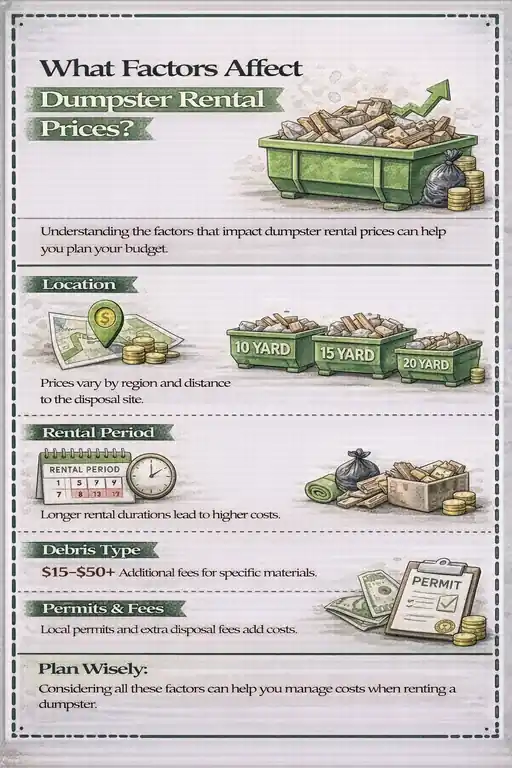
What affects dumpster rental prices most
Dumpster size
Bigger dumpsters cost more because they require more hauling capacity and more disposal space.Debris weight
This is the biggest factor behind surprise charges. Most rentals include a weight allowance, and going over it can raise your final bill fast.Debris type
Certain materials cost more to process or are restricted. That can trigger special handling fees or disposal surcharges.Rental length
Many rentals include a set number of days. Keeping it longer often adds extra-day fees.Local disposal fees
Landfill and transfer station pricing varies by city and county. This is one of the main reasons dumpster quotes change by region.
Our real-world takeaway
At Jiffy Junk, we have seen that most “pricing surprises” happen because homeowners shop based on the base price, not the details. The cheapest quote is often the one with the tightest weight limit or the most add-on fees.
This is especially common with heavy debris from remodel jobs, including:
Tile
Drywall
Flooring
Plaster
Roofing materials
These materials can turn a small project into a heavy load quickly, which is exactly where overage charges come from.
Our opinion
The best dumpster deal is not the lowest advertised number. It is the quote with the most clarity and control.
Before booking, focus on:
What weight is included
What happens if you go over
How long you can keep it
Which items are not allowed
What fees apply at pickup
If you are not filling a full dumpster, paying for only the space you use can often be a smarter value than renting a container that sits half-empty.
Bottom line: Dumpster rental pricing is predictable once you know the rules. The goal is not just to rent a dumpster. It is to finish your project on budget with no surprise charges.
FAQ on Dumpster Rental Prices
Q: What do dumpster rental prices usually cost?
A: Most rentals cost $250–$600. Pricing depends on dumpster size, debris weight, rental length, and local disposal fees.
Q: Why does the same dumpster size cost more in some cities?
A: Dumpster pricing is local. Costs change based on landfill and transfer station fees, hauling distance, and local rules or permits.
Q: What causes the biggest surprise charges?
A: Debris weight. Heavy materials can exceed weight limits quickly, especially tile, drywall, flooring, plaster, and roofing debris.
Q: What extra fees should I ask about upfront?
A: Ask about overweight fees, extra-day rental fees, restricted item fees, trip fees for blocked pickup or overfilled dumpsters, and permit fees for street placement.
Q: Is a dumpster rental always the best value?
A: Not always. At Jiffy Junk, we see dumpsters work best when you will fill most of the container. For partial loads, paying only for the space you use can often be the better value.