
At Jiffy Junk, we’ve seen it firsthand: two homes can be the same size, in the same neighborhood, and still have completely different estate cleanout costs because the job comes down to volume, weight, access, labor hours, and truck capacity. A cleanout with light household items moves fast. But a cleanout packed with dense furniture, heavy debris, or mixed disposal loads can take longer, require a larger crew, and fill multiple trucks, and that’s where costs rise.
This page breaks down the 10 key factors that influence estate cleanout cost, so you can understand what actually drives pricing, spot hidden cost triggers before you request quotes, and make a confident decision without surprise fees.
TL;DR Quick Answers
estate cleanout cost
Estate cleanout cost typically ranges from $500 to $5,000+, but the final price depends on the real workload: how much needs to be removed (volume), how long it takes (labor), how many truckloads are required, and what disposal is needed. At Jiffy Junk, we’ve found the most accurate estimates come from evaluating the contents and access conditions, because two similar homes can have completely different cleanout costs.
Top Takeaways
Estate cleanout cost is workload-based. Not just home size.
Volume + labor time + access + truckloads + disposal drive pricing.
Heavy items and tight access (stairs, long carries) raise costs fast.
Donation vs. landfill impacts total cost.
Transparent quotes prevent surprise fees.
Estate cleanout pricing can feel unpredictable because there’s no universal flat rate. A quote is usually based on the actual workload required to clear the property, including labor time, hauling volume, and disposal needs. That’s why two similar homes can produce very different estimates.
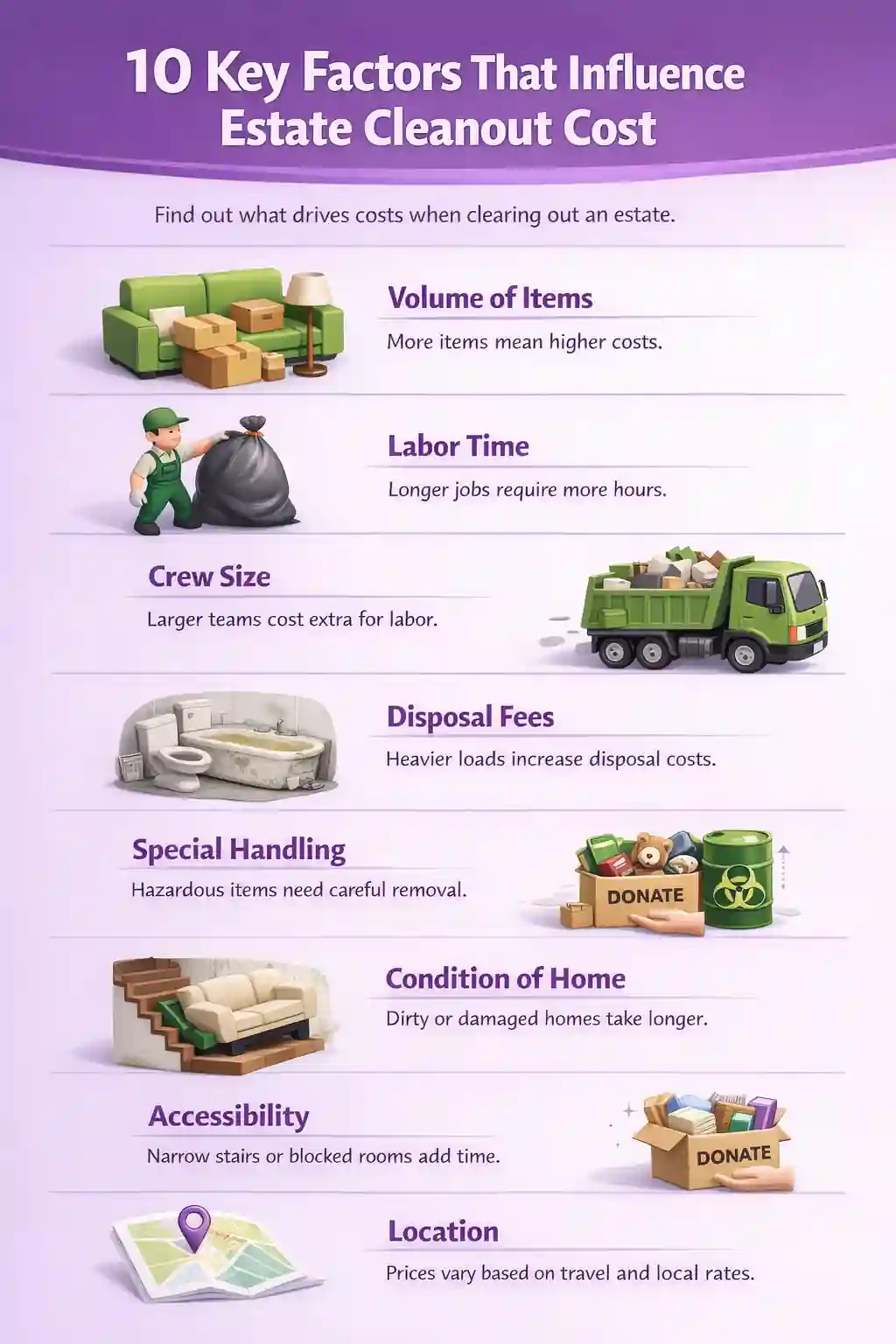
At Jiffy Junk, we’ve found that the most accurate way to understand estate cleanout cost is to look at the factors that affect time on-site and truckloads required. Below are the 10 key variables that most influence pricing.
1) Total Volume of Contents
The number one pricing factor is how much needs to be removed. More items typically means more labor time and more hauling capacity, which increases the total cost.
2) Number of Truckloads Needed
Cleanouts are often priced based on the amount of truck space your items take up. Even if a home isn’t “full,” bulky items can fill a truck quickly and raise the cost.
3) Labor Time (Hours on Site)
Estate cleanouts aren’t just hauling. Crews often need to sort, lift, carry, load, and sweep out areas. The longer the job takes, the higher the labor portion of the quote.
4) Item Weight and Density
Heavy items like solid wood furniture, safes, appliances, and construction debris increase cost because they require more crew effort, more time, and sometimes special equipment.
5) Accessibility (Stairs, Tight Spaces, Long Carry Distance)
If items must be carried down stairs, through narrow hallways, or across long distances to the truck, removal takes longer. Limited parking or long walks from the property can also increase labor time.
6) Property Condition and Clutter Level
A home with clear walkways is faster to clean out than a property with packed rooms or blocked access. Higher clutter levels can slow down removal and increase safety precautions.
7) Special Handling or Safety Risks
Some cleanouts require extra precautions due to hazards like sharp debris, broken glass, pests, odors, mold, or contaminated materials. These conditions can increase labor time and disposal requirements.
8) Disposal Fees and Local Regulations
Disposal costs vary by region and by material type. Certain items may require special drop-off procedures or additional fees, which can affect your final quote.
9) Donation and Recycling Sorting
If a portion of the items can be donated or recycled, that can help reduce landfill waste. However, sorting and separating items takes time, which can influence pricing depending on the job scope.
10) Timeline and Urgency
If you need the cleanout completed quickly due to a sale, probate deadline, or landlord requirement, the job may require extra crew scheduling or priority service, which can impact cost.
What This Means for Your Quote
The most reliable estate cleanout estimates aren’t based on square footage alone. They’re based on what actually drives workload:
How much needs to be removed
How hard it is to remove it
How it must be disposed of
The more clearly a provider explains these factors for junk removal, the easier it is to compare quotes fairly and avoid surprise charges.
“After handling thousands of estate cleanouts, we’ve learned that cost isn’t determined by the house, it’s determined by the workload. Two homes can be the same size and still have completely different pricing because what matters is volume, access, labor hours, and how many truckloads it takes to clear everything safely during a garage cleanout. The most reliable quotes come from teams that price the real removal effort, not a one-size-fits-all estimate.”
Essential Resources
HomeAdvisor Estate Cleanout Cost Guide (Check National Averages Before You Commit)
This resource is useful for setting expectations fast. It gives national pricing ranges so you can sanity-check estimates and understand what “typical” costs look like across the U.S.
https://www.homeadvisor.com/cost/cleaning-services/estate-cleanout/
Angi Estate Cleanout Services Cost (Understand What Add-Ons Can Increase Pricing)
Estate cleanouts often come with extra costs depending on what’s in the home. Angi breaks down common add-ons like hauling, bulky item removal, and related services so you know what may affect the final bill.
https://www.angi.com/articles/estate-cleanout-services-cost.htm
EstateQuoter Estate Cleanout Cost Guide (Compare Realistic Price Ranges by Situation)
A practical guide for understanding how cleanout costs can change based on home size, condition, and contents. Helpful when you’re trying to decide what kind of budget range makes sense before requesting quotes.
https://estatequoter.com/blog/estate-cleanout-cost.html
Leave The Key Probate: Estate Cleanout Cost Breakdown (Learn What Actually Drives the Quote)
This resource explains what influences cleanout pricing most, including clutter level, labor intensity, and access issues. It’s a good read if you want to know what could raise the cost before work begins.
https://probate.leavethekey.com/resources/estate-cleanout-cost/
Get WeCycle Estate Cleanout Cost Guide (See Updated Pricing + Common Fees)
If you’re looking for updated cost ranges, this guide helps break down pricing by cleanout size and includes common fees you may see on quotes.
https://getwecycle.com/blogs/estate-cleanout-services-cost
Owner-Builder Network Estate Cleanout Guide (Understand the Process So You Can Plan Better)
A step-by-step overview of the cleanout process from start to finish. Knowing what happens during a cleanout helps you prepare the property, avoid delays, and make more cost-efficient decisions.
https://theownerbuildernetwork.co/complete-guide-to-estate-cleanout/
These essential resources help you compare cost ranges, understand quote drivers, and avoid surprise fees—just like a bathroom remodel, where labor, add-ons, and scope can quickly change the final price.
Supporting Statistics
Durable goods drive hauling workload
EPA: Durable goods = 57.1 million tons of MSW (2018)
Jiffy Junk insight: Furniture and appliances are the items that most often increase truck space + labor time
Source: https://www.epa.gov/facts-and-figures-about-materials-waste-and-recycling/durable-goods-product-specific-data
Furniture is mostly landfill-bound
EPA: 80.1% of furniture and furnishings were landfilled (2018)
Jiffy Junk insight: Many estate furniture items can’t be donated, so disposal logistics become a major cost factor
Source: https://www.epa.gov/facts-and-figures-about-materials-waste-and-recycling/durable-goods-product-specific-data
Appliances add weight and handling time
EPA: Major appliances = 5.3 million tons (2018)
Jiffy Junk insight: Fridges, washers, and dryers often require multiple crew members and careful removal
Source: https://www.epa.gov/facts-and-figures-about-materials-waste-and-recycling/durable-goods-product-specific-data
Heavy labor increases injury risk (affects crew planning)
BLS: 900,380 cases with days away from work (2018)
BLS: 272,780 (30%) were MSDs
BLS: Median 12 days away for MSD cases
Jiffy Junk insight: Proper equipment + crew size are built into pricing for safety and speed
Source: https://www.bls.gov/iif/factsheets/msds.htm
Access and safe pathways matter in estate homes
CDC: 14+ million adults age 65+ fall each year
CDC: ~37% of falls involve injuries needing medical treatment or restricted activity
Jiffy Junk insight: Clear pathways reduce risk and reduce labor time
Source: https://www.cdc.gov/falls/data-research/index.html
Final Thought & Opinion
Estate cleanout cost isn’t really a “price for a house.”
It’s a price for the workload.
What Drives Cost the Most
From our experience at Jiffy Junk, two similar homes can have very different pricing because cleanout quotes depend on:
How much has to be removed (volume)
How hard it is to remove it (labor time + access)
How it must be disposed of (donation vs. landfill)
The Biggest Hidden Cost Triggers
The cleanouts that cost the most aren’t always the ones with the most items. They’re often the ones with:
Heavy furniture and appliances
Tight stairs or narrow hallways
Long carry distances to the truck
Blocked pathways
Mixed loads that can’t be donated
Our Honest Opinion
The best way to avoid overpaying is to understand what drives the quote before you hire.
A trustworthy provider should clearly explain how:
Volume
Labor time
Access
Truckloads
Disposal
impact the final cost.
A good estate cleanout isn’t just fast. It’s safe, organized, and priced with clarity.
FAQ on Estate Cleanout Cost
Q: What does an estate cleanout usually cost?
A: Most estate cleanouts cost $500 to $5,000+. At Jiffy Junk, pricing is usually driven by volume and truckloads.
Q: What impacts estate cleanout cost the most?
A: The biggest drivers are the volume of contents, labor time, access issues (stairs or tight spaces), heavy items, and disposal needs.
Q: Why can two similar homes have different cleanout quotes?
A: Because cost is based on the workload inside the home, not square footage. A smaller home packed with bulky items can take longer and require more truckloads than a larger home with lighter contents.
Q: How can I lower the cost of an estate cleanout?
A: Prep helps reduce labor time. Removing valuables and documents, separating donations, labeling keep vs. remove items, and clearing walkways can all help lower the final cost.
Q: What should a trustworthy cleanout quote include?
A: A clear quote should explain labor, hauling, disposal/truckloads, and any special handling fees. At Jiffy Junk, we believe transparency upfront prevents surprise charges.