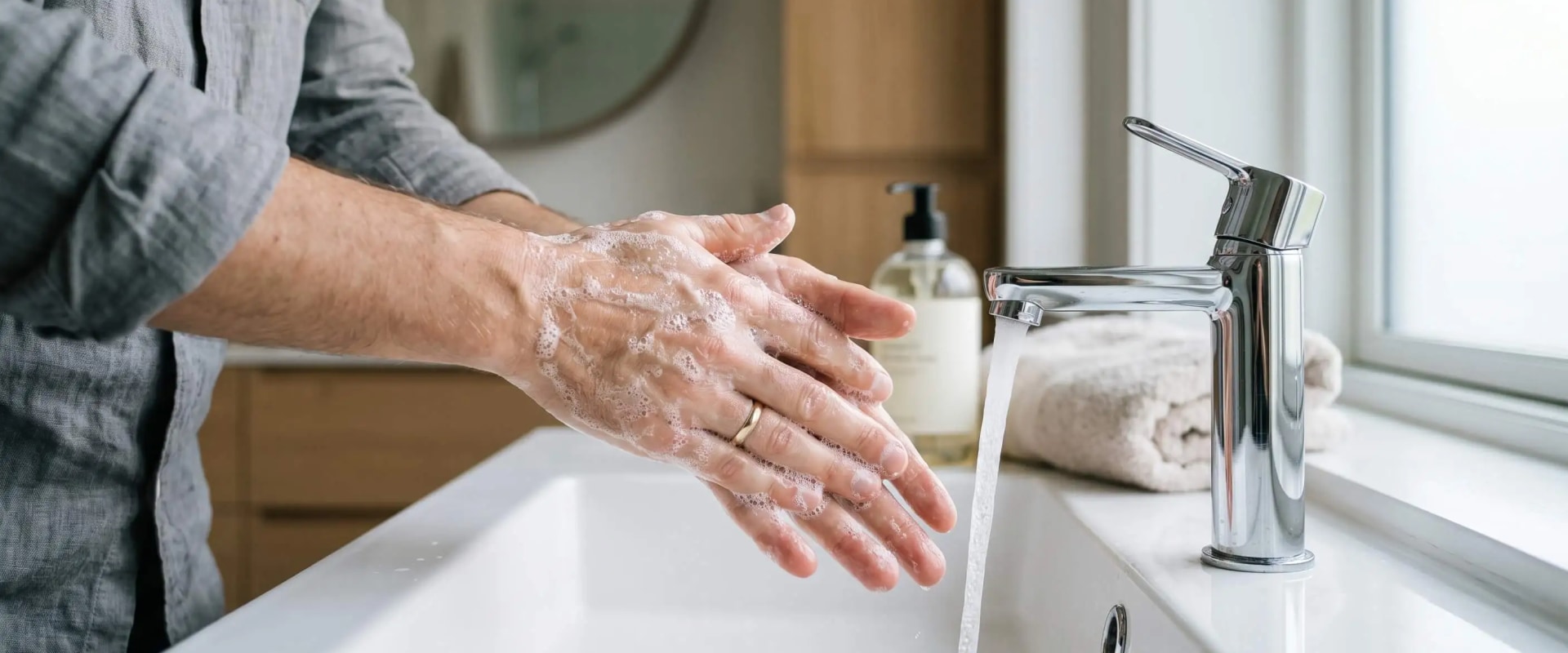
This guide covers which soaps work for frequent washers with dry skin, which ingredients to look for on the label, which to skip, and how to choose between bar, liquid, and foam without overthinking it. If you want a fuller breakdown of what hand washing is and why it matters before getting into soap selection, that page is a useful primer.
TL;DR Quick Answers
What is hand washing?
• Hand washing is the practice of cleaning your hands with soap and water to remove dirt, bacteria, viruses, and other contaminants. It is one of the most effective habits for preventing the spread of illness.
• Best soap for frequent washers with dry skin: a fragrance-free, glycerin-rich syndet bar or a liquid soap labeled for sensitive skin.
• Most important ingredient cue to look for: glycerin near the top of the ingredient list.
• Most important ingredient to avoid: sodium lauryl sulfate (SLS) and heavy fragrance.
• Most important post-wash step: apply a fragrance-free hand cream while hands are still damp, every single time.
Top Takeaways
• The best soaps for frequent hand washing and dry skin are fragrance-free, glycerin-rich, and either pH-balanced syndet bars or liquid formulas labeled for sensitive skin.
• Avoid sodium lauryl sulfate, heavy fragrance, antibacterial activities, alcohol-heavy formulas, and deodorant bars.
• Foaming, liquid, and bar formats can all work. The formulation matters more than the format.
• Apply a fragrance-free hand cream while your hands are still damp, every single time, not just at night.
• Wash with lukewarm water rather than hot water. Hot water strips the skin barrier faster.
• Pat hands dry instead of rubbing them dry to reduce mechanical irritation.
• See a board-certified dermatologist if cracked or bleeding skin doesn't settle within a couple of weeks of changing products.
Why Frequent Hand Washing Dries Out Skin
A thin layer of fats and oils called the lipid barrier holds your skin together. It locks water in and keeps irritants out. Soap works by binding to oils. That's the whole point. The same chemistry that lifts grease and germs off your hands also strips a piece of that barrier with every wash.
For most people, the skin rebuilds itself between washes. For someone washing 15, 20, or 30 times a day, the skin can't keep up. The barrier thins, water escapes, and what's left feels tight, then itchy, then chapped, then split.
I've walked into homes during dumpster rental cleanouts where the powder room sink had three different soaps lined up because nothing was working. Every one of them was an alkaline antibacterial bar. The soap was the problem, not the washing.
What to Look For on a Hand Soap Label
The right hand soap for frequent washes and dry skin does its job without taking the lipid barrier with it. The label gives most of that away. Look for:
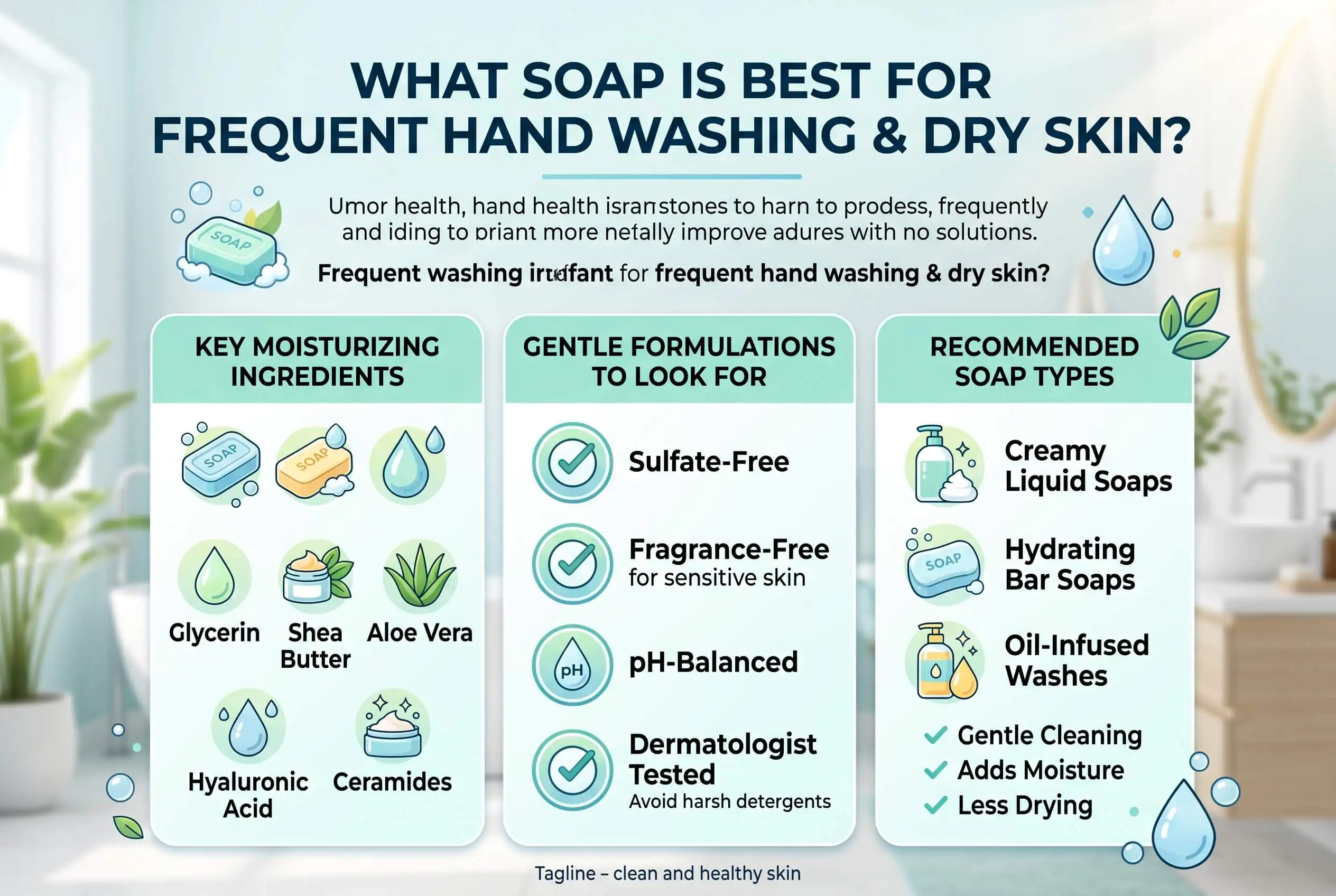
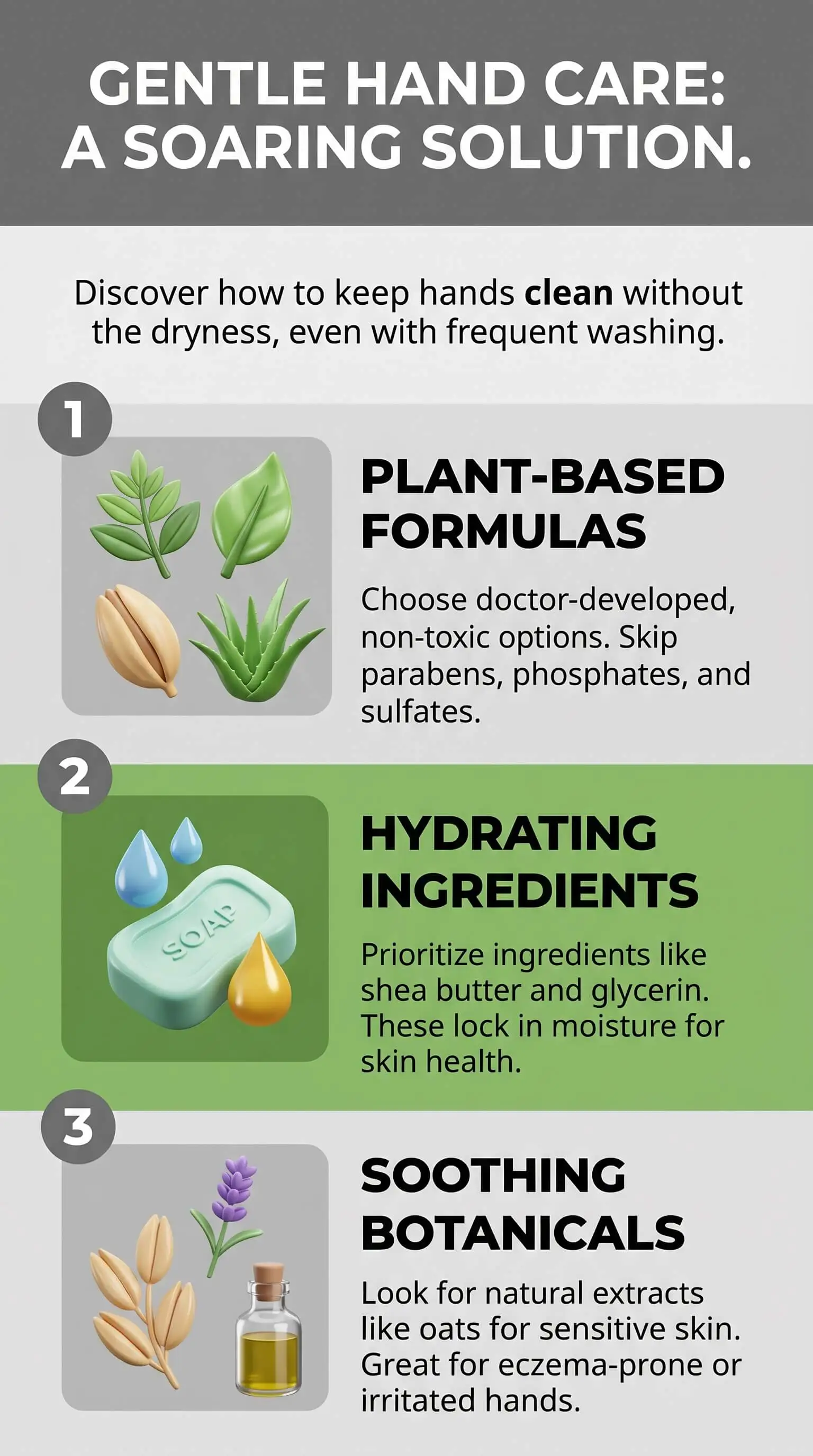
• Glycerin near the top of the ingredient list. Glycerin is a humectant that pulls water into the skin and is one of the most reliable cues that a soap is built to be gentle.
• "Syndet" or synthetic detergent bars. These clean at a pH closer to skin's natural pH (around 5.5) than traditional alkaline soap, which tends to leave the barrier in better shape after repeat washes.
• Fragrance-free, not "unscented." Unscented can still contain masking fragrances. Fragrance-free is the stricter label.
• Sulfate-free, especially free of sodium lauryl sulfate (SLS), the most common harsh surfactant in mass-market hand wash.
• Added emollients such as ceramides, shea butter, fatty acids, panthenol, and colloidal oatmeal.
• A short, readable ingredient list. Long formulas with a dozen unpronounceable items leave more chances for irritation.
If a bar feels squeaky-clean after washing, it takes too much. The right hypoallergenic hand soap leaves your skin clean without stripping it.
What to Avoid in a Hand Soap
A few common ingredients turn an ordinary hand wash into a daily skin irritant. Skip:
• Sodium lauryl sulfate (SLS) and similar harsh sulfates. They're efficient cleansers but rough on the lipid barrier.
• Heavy fragrance loads. Fragrance is one of the leading triggers for irritant and allergic contact dermatitis.
• "Antibacterial" labeling on consumer hand wash. The FDA already pulled 19 antibacterial active ingredients, including triclosan, from over-the-counter soap because the data didn't show they worked any better than plain soap and water.
• Alcohol-heavy formulas, which can dry hands the way a sanitizer does.
• Deodorant bars. They're built to control body odor, not to protect frequently-washed hand skin, and they tend to run alkaline and harshly.
A clean ingredient deck matters more than a brand name. Two products from the same company can sit at opposite ends of the gentleness spectrum.
Bar vs. Liquid vs. Foaming: Which Wins for Dry Skin?
A well-formulated syndet bar is hard to beat for dry hands. The neutral pH and concentrated emollient blend tend to leave the barrier in better shape than mass-market liquid soap.
A glycerin-rich liquid hand soap labeled for sensitive skin runs a close second and is often more practical at a busy household sink. Liquid forms also reduce the cross-contact that makes some people uncomfortable about shared bar soap.
Foaming hand soap is usually the most diluted of the three. The pre-aerated formula uses less surfactant per wash, which can be gentler on skin. The catch is that a foaming soap loaded with SLS and fragrance is still drying. The format matters less than the formulation. The label on the front sells. The back tells you what's actually inside.
"After years of walking into other people's bathrooms during remodels and watching what actually gets used, I'd tell anyone who washes their hands more than ten times a day: pick a fragrance-free, glycerin-rich soap, set a small bottle of cream right next to the dispenser, and use it every single time. The soap matters, and the cream you reach for right after matters at least as much."
7 Essential Resources
These are the sources I keep returning to when the question comes up. All seven come from federal health agencies, dermatological associations, or peer-reviewed medical literature.
1. CDC, Handwashing Facts and Statistics. Federal guidance on when, why, and how to wash hands, with the underlying public-health evidence. https://www.cdc.gov/clean-hands/data-research/facts-stats/index.html
2. World Health Organization, Hand Hygiene Hub. Global standards, the WHO Guidelines on Hand Hygiene in Health Care, and the science behind them. https://www.who.int/teams/integrated-health-services/infection-prevention-control/hand-hygiene
3. American Academy of Dermatology, Dry Skin Relief from Handwashing. Dermatologist-reviewed steps for keeping hands healthy when you have to wash them often. https://www.aad.org/public/everyday-care/skin-care-basics/dry/coronavirus-handwashing
4. National Eczema Association, Eczema Product Directory. A searchable list of cleansers and hand soaps tested and accepted for eczema-prone and sensitive skin. https://nationaleczema.org/eczema-products/
5. U.S. Food and Drug Administration, Skip the Antibacterial Soap. The FDA's consumer-facing explanation of why plain soap is the recommendation, and which 19 antibacterial active ingredients were pulled from the market in 2016. https://www.fda.gov/consumers/consumer-updates/skip-antibacterial-soap-use-plain-soap-and-water
6. MedlinePlus (NIH/NLM), Dry Skin Self-Care. Federal patient-education page on managing dry skin at home, including which products to avoid. https://medlineplus.gov/ency/patientinstructions/000751.htm
7. PMC / NIH, Cleansing Formulations That Respect Skin Barrier Integrity. Open-access peer-reviewed review on how surfactants in soap and syndet cleansers interact with the skin barrier. https://pmc.ncbi.nlm.nih.gov/articles/PMC3425021/
3 Statistics
8. Up to 100 hand washes per shift. The CDC reports that some healthcare workers may need to clean their hands as often as 100 times during a 12-hour shift, which is a useful reference point for anyone at home using eco-friendly soap who feels like they're washing constantly.
. (CDC, "Clinical Safety: Hand Hygiene for Healthcare Workers." https://www.cdc.gov/clean-hands/hcp/clinical-safety/index.html)
9. 1.51× higher risk of hand eczema at 8–10 daily washes. A 2022 peer-reviewed meta-analysis pooled across 29 studies found that people washing their hands at least 8 to 10 times per day had a 1.51 times higher risk of developing hand eczema than less frequent washers. The risk climbed further at 15–20 washes per day. (Lan et al., "Hand hygiene and hand eczema: A systematic review and meta-analysis," PMC. https://pmc.ncbi.nlm.nih.gov/articles/PMC9111880/)
10. Roughly 30% fewer diarrhea-related illnesses, 20% fewer respiratory infections. CDC data shows that hand washing with soap can prevent about 30% of diarrhea-related illnesses and about 20% of respiratory infections such as the common cold. The right soap lets you keep that protection without losing your skin. (CDC, "Handwashing Facts." https://www.cdc.gov/clean-hands/data-research/facts-stats/index.html)
Final Thoughts and Opinion
If your hands hurt by Wednesday, the soap is the wrong soap.
Hand washing means cleaning your hands with soap and water to remove dirt, microbes, and other contaminants. It's one of the cheapest and most effective health habits there is. Nothing in this guide is an argument for washing less. The argument is for washing better.
My recommendation, after a long stretch of seeing what people actually keep next to the sink: a fragrance-free syndet bar or a glycerin-heavy liquid soap labeled for sensitive skin, paired with a fragrance-free hand cream stationed in arm's reach. That combination keeps your hands clean and your skin closed. Antibacterial soaps aren't worth the shelf space — the FDA already concluded they don't outperform plain soap. Deodorant bars belong in the body wash aisle, not on the hand-wash dispenser. When you're choosing, the back of the bottle is the only label that matters.
If your hands are already cracked, bleeding, or itching in a way that doesn't settle within a few weeks of switching products and adding a moisturizer, see a board-certified dermatologist. Persistent hand dermatitis can have a medical cause that no soap on the shelf is going to fix, and the longer it sits untreated the harder it becomes to manage.
The soap on your bathroom counter is one of the smallest items in the room and one of the few you touch every day. It's worth getting right.
Frequently Asked Questions
What is hand washing?
Hand washing is the practice of cleaning your hands with soap and water to remove dirt, bacteria, viruses, and other contaminants. The CDC recommends a five-step routine: wet, lather, scrub for at least 20 seconds, rinse, and dry. It is one of the simplest and most effective habits for preventing the spread of illness at home, at work, and in healthcare settings.
What is the gentlest soap for frequent hand washing?
A fragrance-free, glycerin-rich soap is usually the gentlest option. Look for syndet bars or liquid soaps labeled for sensitive skin, free of sodium lauryl sulfate, dyes, and heavy fragrance. Dermatologists commonly recommend brands such as Cetaphil, Vanicream, CeraVe, and Dove Sensitive Skin for frequent washers.
Is bar soap or liquid soap better for dry hands?
Both can work if the formulation is right. A neutral-pH syndet bar with added emollients is hard to beat on the ingredient deck alone. A glycerin-heavy liquid soap labeled for sensitive skin is often more practical at a busy household sink. The format matters less than the ingredients listed on the back of the package.
Does antibacterial soap dry out your hands?
Often, yes. Antibacterial formulas tend to be more drying than plain soap. In 2016 the FDA restricted 19 antibacterial active ingredients, including triclosan and triclocarban, from over-the-counter consumer hand washes. Manufacturers couldn't show those ingredients were safer or more effective than plain soap and water.
Should I moisturize after every hand wash?
Yes, especially if you wash more than ten times a day. The American Academy of Dermatology recommends applying a fragrance-free moisturizer while hands are still slightly damp, which seals water into the skin instead of letting it evaporate. Keeping a small bottle of hand cream right next to the soap dispenser makes the habit easy to keep.
Is hand sanitizer better than washing with soap?
Soap and water is the CDC's first preference whenever a sink is available, especially when hands are visibly dirty or after using the bathroom. Alcohol-based hand sanitizer with at least 60% alcohol is a good substitute when a sink isn't nearby, but it can still dry the skin, so pair it with moisturizer.
How often should you wash your hands per day?
There's no single number. The CDC's guidance is to wash at key moments: before eating, before handling food, after using the bathroom, after blowing your nose, after touching public surfaces, and after handling pets or garbage. Healthcare workers may wash up to 100 times in a 12-hour shift. Most people at home land somewhere in the 8-to-15 range on a normal day.
What to Do Next
If your bathroom is overdue for an upgrade, soap is one of the easiest places to start. You don't need a contractor or a permit, and there's no construction dust to clean up afterward. Pick one fragrance-free, glycerin-rich hand soap and one fragrance-free hand cream this week, put them next to your sink, and see what your hands feel like in two weeks. If you're planning a bigger refresh, browse the rest of the bathroom remodeling guides to plan the rest of the room around the small things you actually use every day.