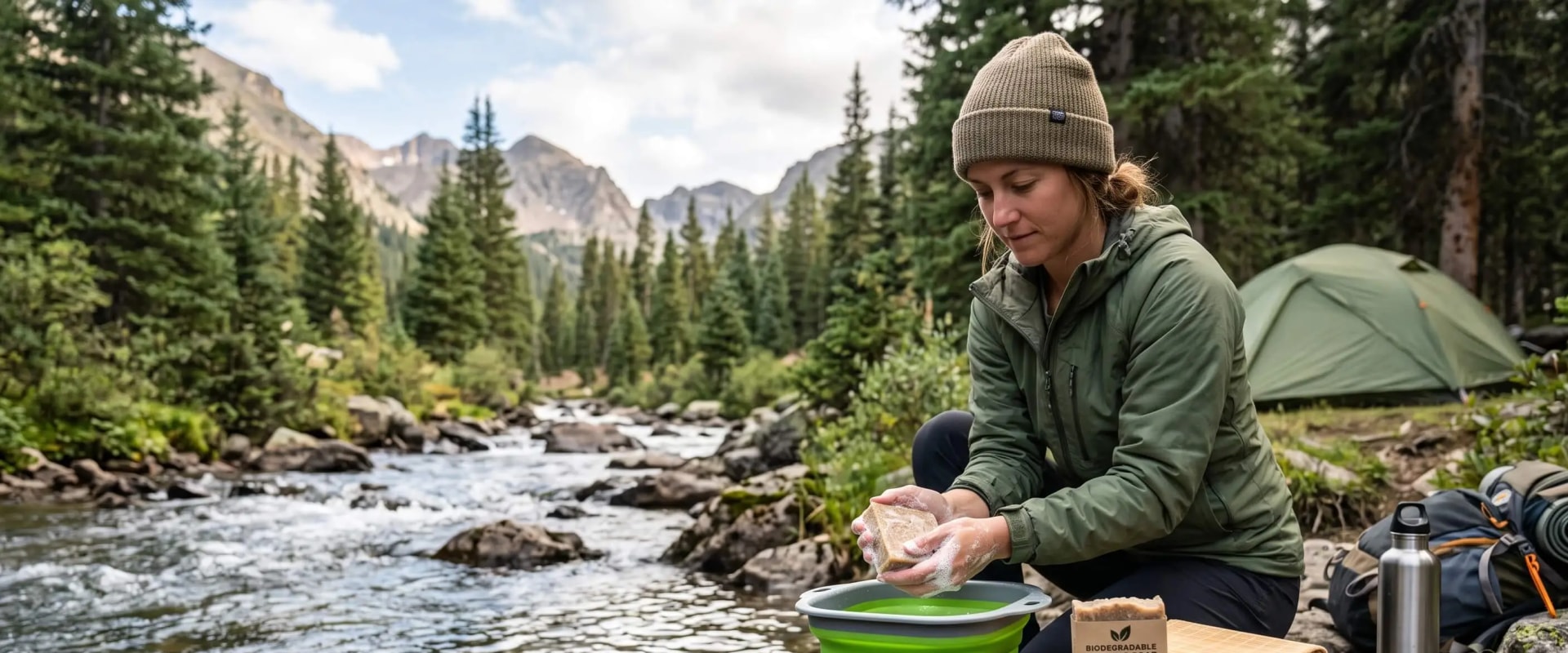
An environmentally friendly soap for camping can make outdoor cleanup simpler, lighter, and more responsible. The best options combine verified biodegradability, thoughtfully selected ingredients, and concentrated formulas that work well with less water and less product. When used away from lakes, rivers, and streams, they help campers stay clean while reducing unnecessary impact on the places they came to enjoy. Here's what to look for in a genuinely lower-impact option and how to wash up without leaving a mark.
TL;DR Quick Answers
environmentally friendly soap for camping
The best environmentally friendly soap for camping is biodegradable, sulfate-free, and concentrated enough that a few drops clean a full dish tub.
Look for OECD 301 or EPA Safer Choice verification, not just the word "eco-friendly" on the bottle.
Skip sulfates, phosphates, and parabens. None of them are necessary to cut grease off a camp pan.
Wash and rinse at least 200 feet from any water source, then scatter the water over soil instead of into it.
Top Takeaways
Biodegradable has no legal meaning on its own. Look for OECD 301 or FTC-level verification instead of taking the word at face value.
Biodegradation is a real process that needs soil microorganisms, oxygen, and time, none of which exist in open water. The mechanics of biodegradation are worth understanding if you want the fuller picture.
Skip sulfates, phosphates, parabens, and synthetic fragrance in anything you plan to use near a campsite.
Concentrated, cold-water-friendly formulas cut down on both how much soap you carry and how much ends up in the environment.
Formula and disposal are separate problems. Solving one doesn't solve the other.
What Actually Makes a Dish Soap Safe for the Outdoors
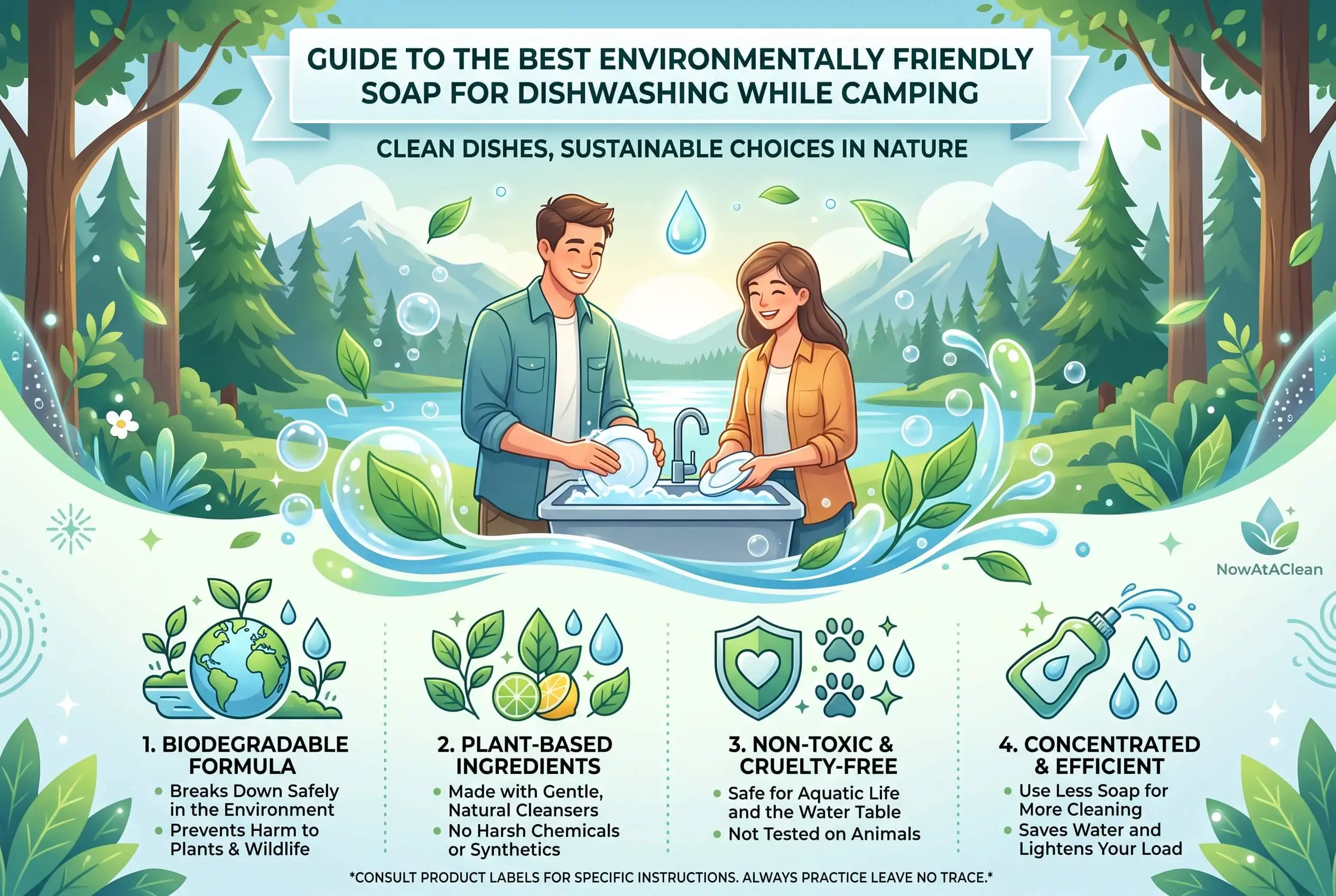
Walk down any camping aisle and half the bottles say natural, green, or eco-friendly. None of those words carry a legal definition, so none of them tell you much. Here's what actually separates a soap worth packing from one that's just marketed well:
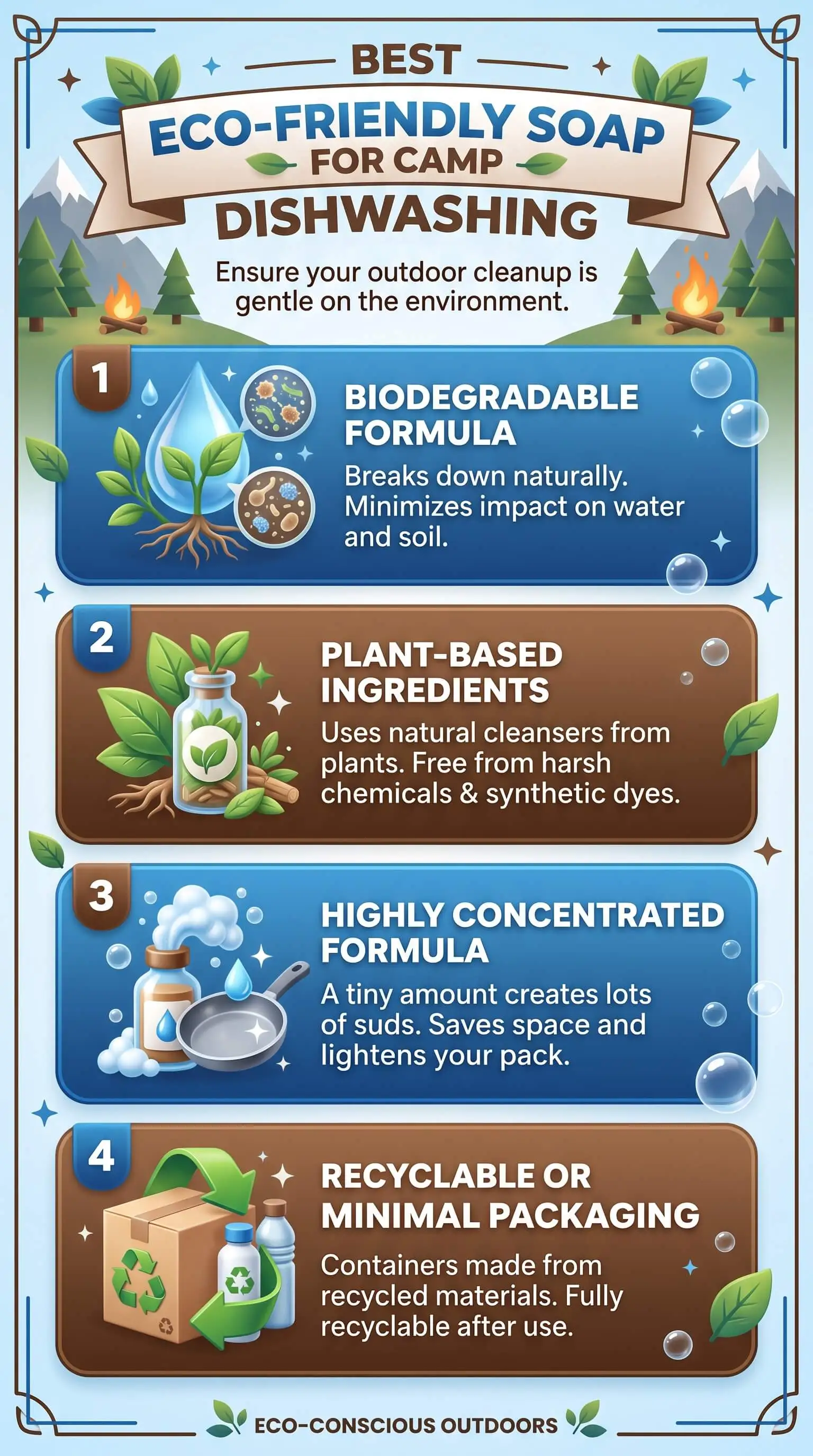
Plant-based, not petroleum-based. Ingredients pulled from plant oils break down into harmless compounds. Petroleum-based surfactants stick around in soil and water a lot longer.
No sulfates, phosphates, or parabens. SLS and its relatives can irritate skin and persist in the environment, and none of them are necessary to cut grease off a camp pan.
A few drops go the distance. Concentrated formulas mean less soap total, which means less of it ends up wherever your wash water lands.
Lathers in cold water. Most campsites don't come with a way to heat a full basin, so a soap that only performs warm isn't much use out here.
Unscented, or close to it. Citrus and peppermint smell great in a bottle and terrible at a dish station. Strong scent is exactly what draws insects and wildlife over.
Dish soap and all-purpose camp soap get lumped together constantly, and they shouldn't be. A soap built for hair and skin prioritizes gentleness. A soap built for dishes needs to cut grease, food residue, and campfire soot without leaving a film that changes how your next meal tastes off the same plate. Buy for one job and you'll end up settling for the other.
Here's the part most guides skip: the formula matters less than what you do with it afterward. Even a fully biodegradable soap needs soil microorganisms, oxygen, and time to break down, and none of that happens in a lake or a stream. The same principle applies to hand washing: the standard practice, straight from Leave No Trace, is to carry your wash water at least 200 feet from any water source, strain out the food scraps, and scatter the water over a broad patch of soil so it can filter naturally.
“The Leave No Trace Center for Outdoor Ethics runs into this misconception constantly: campers assume a “biodegradable” label means the soap is fine to use straight in a lake or river. It isn't. Soap and food residue change water chemistry and interfere with how aquatic insects and other organisms breathe, even when the soap itself is plant-based. Our read on their field guidance: formula and disposal are two separate decisions. Getting the soap right doesn't make up for getting the distance wrong, and getting the distance right doesn't excuse a harsh formula.”
7 Essential Resources
Biodegradable and eco-friendly aren't regulated terms on their own. These seven sources are where the actual standards and verification come from.
FTC Green Guides. What a company legally has to prove before calling a product biodegradable. View the FTC Green Guides summary
OECD Test No. 301. The international testing standard for ready biodegradability: 60 to 70 percent breakdown within 28 days under lab conditions. Read the OECD 301 testing standard
EPA Safer Choice. A government-verified certification that screens every ingredient for health and environmental impact instead of taking a company's word for it. Browse EPA Safer Choice certified products
USDA BioPreferred. Lab testing that certifies exactly what percentage of a product comes from renewable, plant-based sources. Search the USDA BioPreferred catalog
EWG Skin Deep Database. An independent ratings database, useful because a soap can be biodegradable and still contain ingredients worth avoiding. Look up a product in the EWG Skin Deep Database
Leave No Trace: Dispose of Waste Properly. The field guidance behind the 200-foot rule and proper dishwater disposal. Read the Leave No Trace waste disposal guidance
EPA Greener Products Guide. A plain breakdown of which eco-labels require independent verification and which ones a company can slap on a bottle with zero oversight. See the EPA's guide to greener cleaning products
These seven resources help confirm that a biodegradable soap is backed by credible testing, safer ingredient standards, meaningful environmental certifications, and responsible outdoor-use guidance.
Supporting Statistics
60 to 70 percent within 28 days. That's the OECD 301 threshold a soap has to clear in lab testing to earn the readily biodegradable label, and it's the bar most credible certifications use. Source: OECD Test No. 301
One year. Under FTC Green Guides, a company can't legally make an unqualified biodegradable claim unless the entire product fully decomposes within one year of typical disposal. Source: FTC Green Guides summary
Six months to several years. That's how long even biodegradable soap can take to break down once it's in water instead of soil, which is exactly why the disposal method carries as much weight as the formula. Source: Leave No Trace backcountry dishwashing guidance
Final Thoughts
It's tempting to treat this like a shopping decision: buy the right bottle, feel good, move on. That's only half the job. A plant-based, sulfate-free soap poured straight into a stream does more damage than a mediocre soap used sparingly and dumped 200 feet from the water.
Our take: don't let a green label do your thinking for you. Check for actual certification, use less than you think you need, and treat disposal as part of the process instead of an afterthought. That combination, not the bottle by itself, is what protects the place you're camping in.
Frequently Asked Questions
What makes dish soap eco-friendly for camping?
An eco-friendly camp dish soap is independently verified as biodegradable, not just labeled that way. It's also free of sulfates, phosphates, and synthetic fragrance, concentrated enough that a few drops do the job, and effective in cold water, since most campsites can't heat a full basin.
Is Dr. Bronner's or a similar castile soap safe for washing dishes at a campsite?
Mostly, yes. Plant-based castile soaps are concentrated and biodegradable, which makes them a common pick for camp dishes and a practical option to consider alongside products selected for a bathroom remodel. They still need to be used away from water sources and disposed of on soil like any other camp soap.
Can I wash dishes directly in a lake or stream if the soap is biodegradable?
No. Biodegradable soap needs soil, oxygen, and time to break down, and none of that happens in open water. Even fully biodegradable soap can disrupt aquatic life if it goes straight into a lake or stream.
How far from water should I wash camp dishes?
At least 200 feet, or about 70 adult paces, from any lake, stream, or water source. That's the standard Leave No Trace distance.
Does biodegradable dish soap cut grease as well as regular dish soap?
Most plant-based, biodegradable soaps handle typical camp grease and food residue fine. Expect to scrub a little harder on heavy, cast-iron-style grease than you would with a harsher synthetic detergent.
Keep Your Camp Kitchen Clean, Not Contaminated
Get the soap right, use less than you think you need, and wash at least 200 feet from water. Those three habits protect the place you're camping in more than any label on a bottle ever will. An eco-friendly soap supports those habits by offering a more responsible option for outdoor cleanup. Check your kit against the criteria above before your next trip, and know where you'll wash up before you need to.