We think that's the wrong trade.
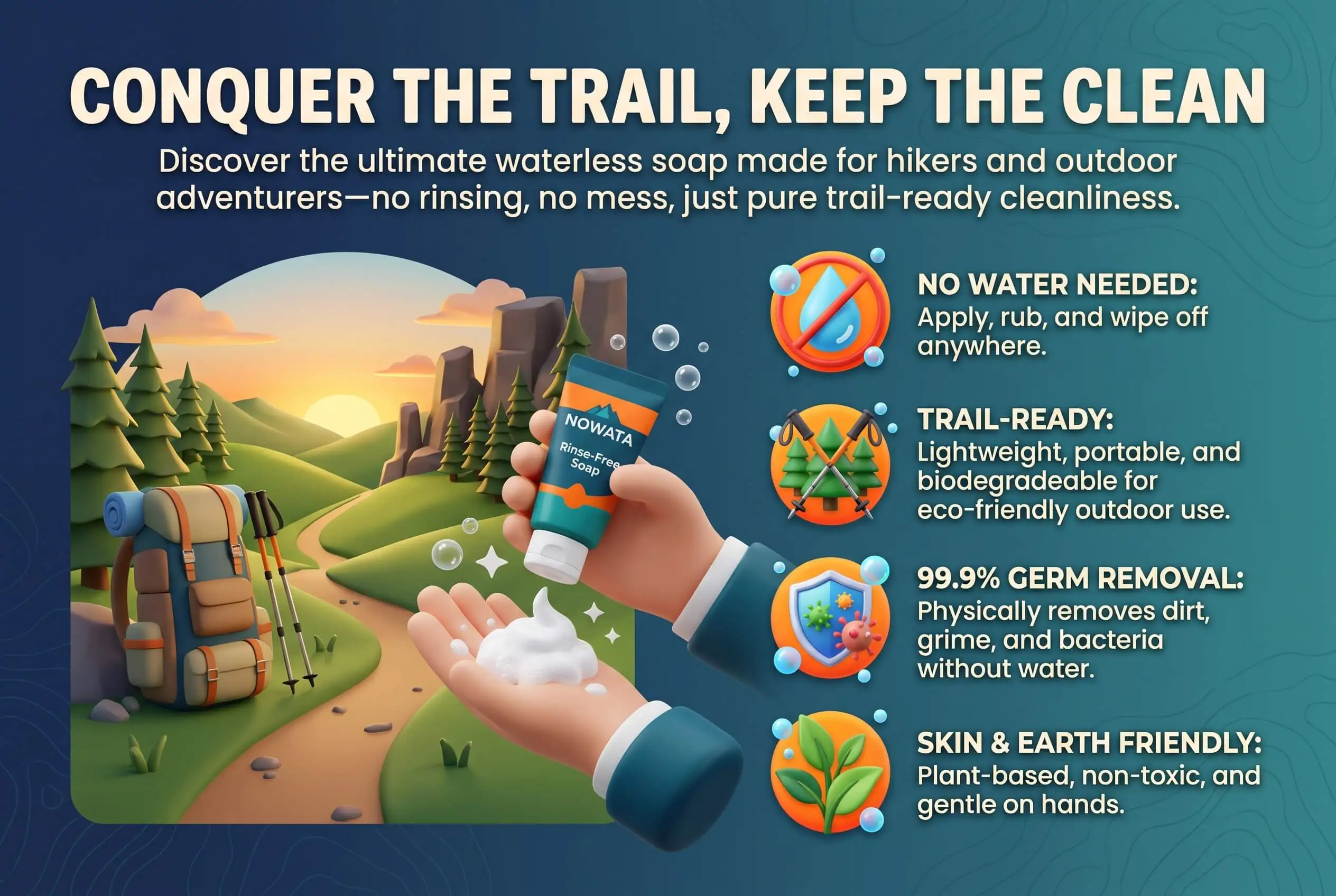
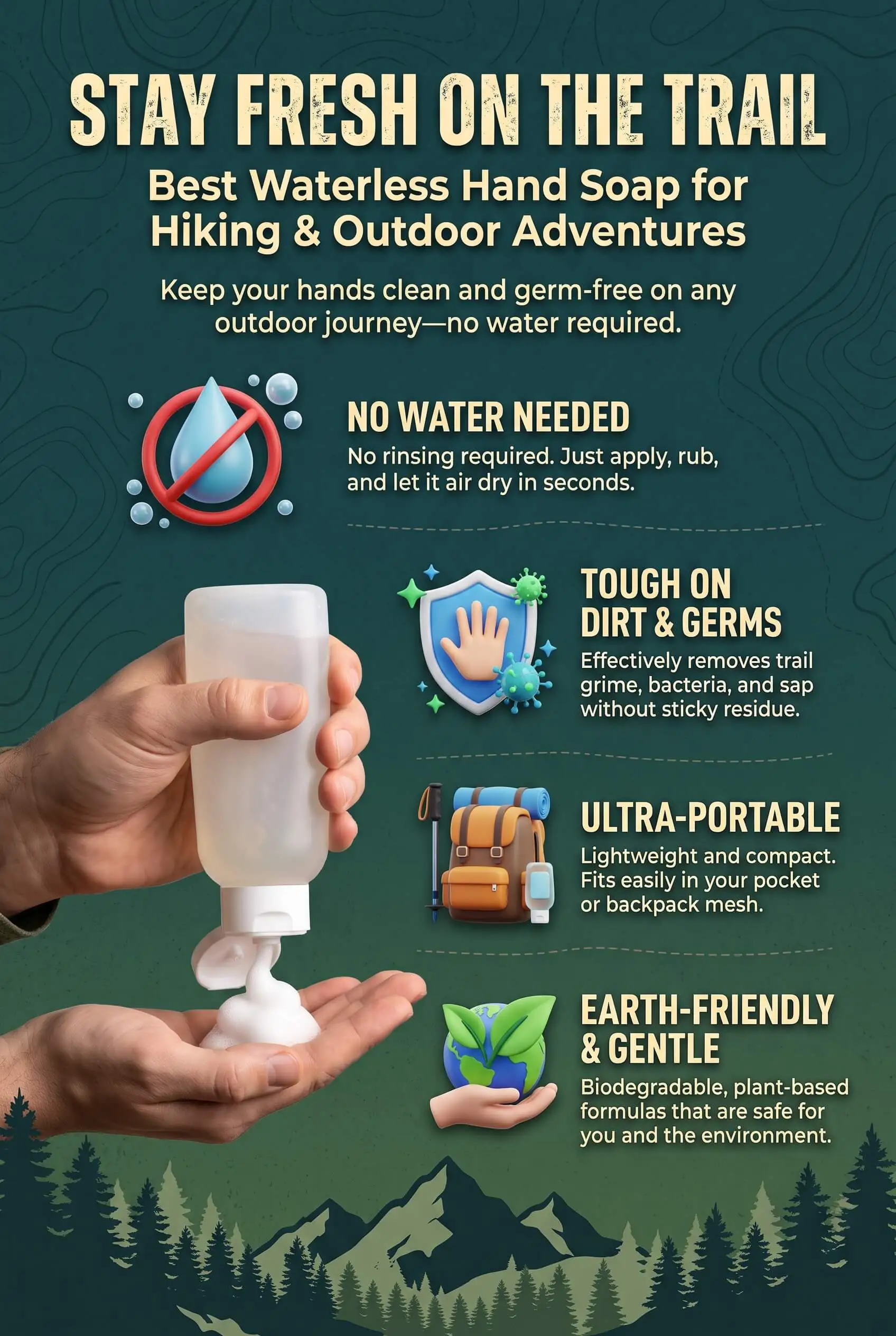
The best waterless hand soap for hiking lifts visible dirt off your skin with no rinse, skips the alcohol, breaks down in nature, and fits in a hip-belt pocket. Clean hands beat treated hands, and on the trail you'll feel the difference by the first snack break.
TL;DR Quick Answers
Best Waterless Hand Soap
The best waterless hand soap removes dirt instead of just treating it. It traps grime, oil and germs in small clumps that you wipe away, with no water and no rinse.
Removes, doesn't just kill: lifts sap, mud and food residue that sanitizer leaves on greasy hands.
No rinse: saves drinking water and keeps soapy greywater out of streams.
Alcohol-free: gentler on cracked, wind-dried hands.
Plant-based and biodegradable, with no synthetic fragrance.
Pocket-size: rides in a hip belt, ready before every snack.
How to use it: one drop on dry hands, rub for 20 to 30 seconds, then wipe off the residue.
Top Takeaways
Sanitizer cuts down germs, but it may not work well on the greasy, grimy hands you get on the trail.
Waterless soap traps dirt and germs so you can wipe them away without rinsing.
Look for a formula that's alcohol-free, plant-based, biodegradable, fragrance-free and small enough for a pocket.
Rub one drop in for 20 to 30 seconds, then wipe off the residue.
Skipping the rinse means no soapy greywater near lakes and streams.
Keep one bottle on your pack strap and another in the camp kitchen.
Why Clean Hands Matter So Much on the Trail
Your hands do almost everything on a hike. They grab rocks, work the water filter, stake the tent and hold the privy trowel, and then they carry a fistful of jerky straight to your mouth.
On a group trip, one upset stomach can stall everybody. Clean hands are the lightest gear you'll carry to keep the trip moving.
Why Hand Sanitizer Alone Falls Short Outdoors
Sanitizer has earned its place in the first-aid kit. On lightly soiled hands, a sanitizer with at least 60% alcohol makes a solid backup, and the CDC still recommends one when soap and water aren't around.
Trail hands are rarely lightly soiled, though. The CDC says sanitizers may not work well on heavily soiled or greasy hands, and it lists camping and fishing as examples.
That's the gap. Sanitizer treats whatever sits on your skin and leaves the sap and sunscreen grease right where they were, so what you're left holding is sanitized grime.
How Soap Cleans, and How Waterless Soap Does It Without a Rinse
Traditional soap grabs oil with one end of its molecule and water with the other. You lather up, the soap holds on to the grime, and running water carries it off.
Take away the water and that whole system stalls. Waterless formulas work differently. They trap dirt, oil and germs in small clumps you can wipe or brush away, so the mess leaves your hands instead of drying onto them.
What Makes the Best Waterless Hand Soap for Hiking
Plenty of no-rinse products just spread dirt around under a sticky film. Here's what we look for in the best waterless hand soap before it earns a spot in the pack.
It lifts visible dirt. Sap, trail grime and food residue should come off your skin, not just get treated.
It needs no rinse. Your drinking water stays in the bottle, and soap stays out of the stream.
It's alcohol-free. Cracked, wind-dried hands sting less without it.
It's plant-based and readily biodegradable, which is easier on the places you hike.
It has no synthetic fragrance. Your snack bag doesn't need a perfume trail leading every critter in camp to it.
It's pocket-size and light enough to ride in a hip belt where you can actually reach it.
It goes a long way. One small bottle should outlast a long trip.
Someone independent tested it. Lab data from an outside lab tells you more than any label claim.
Removal vs Killing: The Distinction That Matters
Most hand products set out to kill germs where they sit. A good waterless soap removes them along with the dirt they hide in, and once the grime is gone, nothing is left behind to shield anything. That's what we mean by clean, and it's a long way from being treated.
Waterless Soap vs Hand Sanitizer vs Wipes
Waterless no-rinse soap cleans visible dirt without water, usually contains no alcohol and leaves almost nothing to pack out. Reach for it at meals, during camp chores and for everyday trail cleanup.
Alcohol hand sanitizer handles heavy grime poorly, needs no water and contains 60% or more alcohol. It works best for a quick germ reduction on lightly soiled hands.
Wet wipes take off some visible dirt, need no water and vary in alcohol content, but every used wipe goes out in your pack. They're handy for wiping heavy mud off before you wash.
How to Clean Your Hands Without Water: A Trail Routine
Knock off the loose dirt first. Rub your palms together or brush them on your pants.
Put one small drop of waterless soap on dry hands.
Rub for 20 to 30 seconds, covering palms, backs, between your fingers and under your nails.
Wipe or brush the clumped residue away with a bandana or a small cloth.
Pack out anything you used, and leave the trail cleaner than your hands were.
If you reach clean water with mud caked on your hands, wash there as well. Waterless soap covers every stretch in between.
Leave No Trace: Why No-Rinse Is Kinder to Streams and Lakes
Leave No Trace guidance asks you to carry wash water at least 200 feet from lakes and streams, even with biodegradable soap. In practice, that means hauling a pot away from the creek, washing, and scattering the greywater every single time.
No-rinse soap skips that routine. You make no greywater and put no suds near the creek, and you don't haul extra water uphill.
Packing Tips for Day Hikes, Backpacking and Camping Trips
Clip a small bottle to your hip belt or shoulder strap so you can reach it before every snack.
Keep a second bottle in the camp kitchen bag for cooking and dishes.
Carry a refillable silicone travel bottle to save weight and plastic.
Pack one for the kids, since little hands find every mud puddle on the trail.
Between trips, keep your hygiene kit refilled in a bathroom drawer or cabinet so you never head out without it.
"For years, a squirt of sanitizer before lunch felt like enough. Then three people on a four-day trip got sick within a day of each other, and every one of us had been eating with sap and dirt still on our hands. I've tested every no-rinse option I could fit in a hip belt since then. My rule is simple now. If the grime doesn't come off, your hands aren't clean, however they smell afterward. The ones that work lift the dirt so you can wipe it away, and they don't leave a sticky film that grabs the next handful of trail dust. I keep one bottle on my pack strap and another in the cook kit, and on group trips I pass it around before every meal. It's the cheapest insurance we carry."
7 Essential Resources
CDC: Hand Sanitizer Facts covers why sanitizer struggles on heavily soiled or greasy hands, with camping and fishing as its examples.
CDC: Hand Sanitizer Guidelines and Recommendations explains when sanitizer works as a backup, the 60% alcohol threshold, and what it can't remove.
CDC: About Handwashing lays out why washing with soap ranks among the best ways to stay healthy.
National Park Service: Leave No Trace Seven Principles sets the 200-foot rule for washing, camping and catholes.
Leave No Trace: Dispose of Waste Properly makes the case for using even biodegradable soap sparingly and well away from shorelines.
Backpacker: Prof. Hike's Guide to Smart Personal Hygiene points to hand-to-mouth contact as a common cause of trail illness and says when to clean up.
SectionHiker: How to Stay Clean on a Backpacking Trip shares everyday backpacking hygiene habits, from washing before meals to turning down the shared snack bag.
3 Statistics
Handwashing education cuts the number of people who get diarrhea by 23 to 40%, according to CDC Handwashing Facts. On a group trip, that can decide whether you finish the loop or bail at the trailhead.
Colds and other respiratory illnesses drop by 16 to 21% across the general population with handwashing education, per the same CDC data. Shared tents and shared snack bags make this one count.
A single gram of human feces can hold one trillion germs, the CDC reports. A gram weighs about as much as a paper clip, which is exactly why the privy trowel and your trail mix should never share an unwashed hand.
Final Thoughts and Opinion
Here's where we land. Sanitizer belongs in the first-aid kit, but nobody designed it for sap, mud and sunscreen, and asking it to clean trail hands is a bit like asking a dryer sheet to do the laundry.
The best waterless hand soap closes that gap. It takes the grime off instead of treating it and saves your drinking water for drinking. It also keeps suds away from the creek, which makes it a better deal for your hands and the trail alike.
We'd still wash with water whenever we could do it 200 feet from the stream. For every snack break, privy stop and camp dinner in between, no-rinse soap is the first thing we grab.
Frequently Asked Questions
What is the best waterless hand soap for hiking?
The best waterless hand soap for hiking removes visible dirt without a rinse, contains no alcohol, is plant-based and biodegradable, and comes in a pocket-size bottle. Testing from an independent lab is a strong plus.
Is waterless hand soap the same as hand sanitizer?
No. Sanitizer relies on alcohol to cut down germs where they sit, while waterless soap lifts dirt, oil and germs off your skin so you can wipe them away.
Does waterless soap work on muddy or greasy hands?
Yes, and that's the job it's built for. Knock the loose mud off first, rub in a drop of soap, and wipe away the clumped residue. If your hands are caked in mud, wash with water too once you reach a source.
Is no-rinse hand soap safe to use near lakes and streams?
No-rinse soap makes no soapy greywater, so nothing runs into the water. You should still pack out any cloth or wipe you use and follow Leave No Trace guidance for any soap you do rinse.
How long does a small bottle of waterless soap last on a trip?
That depends on the brand and how often you use it. Some pocket-size bottles are rated for around 80 to 100 uses [VERIFY], which covers most multi-day trips for one person.
Pack Clean Hands for Your Next Adventure
Your next trail lunch deserves better than sanitized grime. Pick a waterless soap that lifts the dirt, clip it somewhere you can reach it, and save your water for drinking.
Explore waterless hand sanitizers before your next hike, and send this guide to the friend who always forgets to pack one.