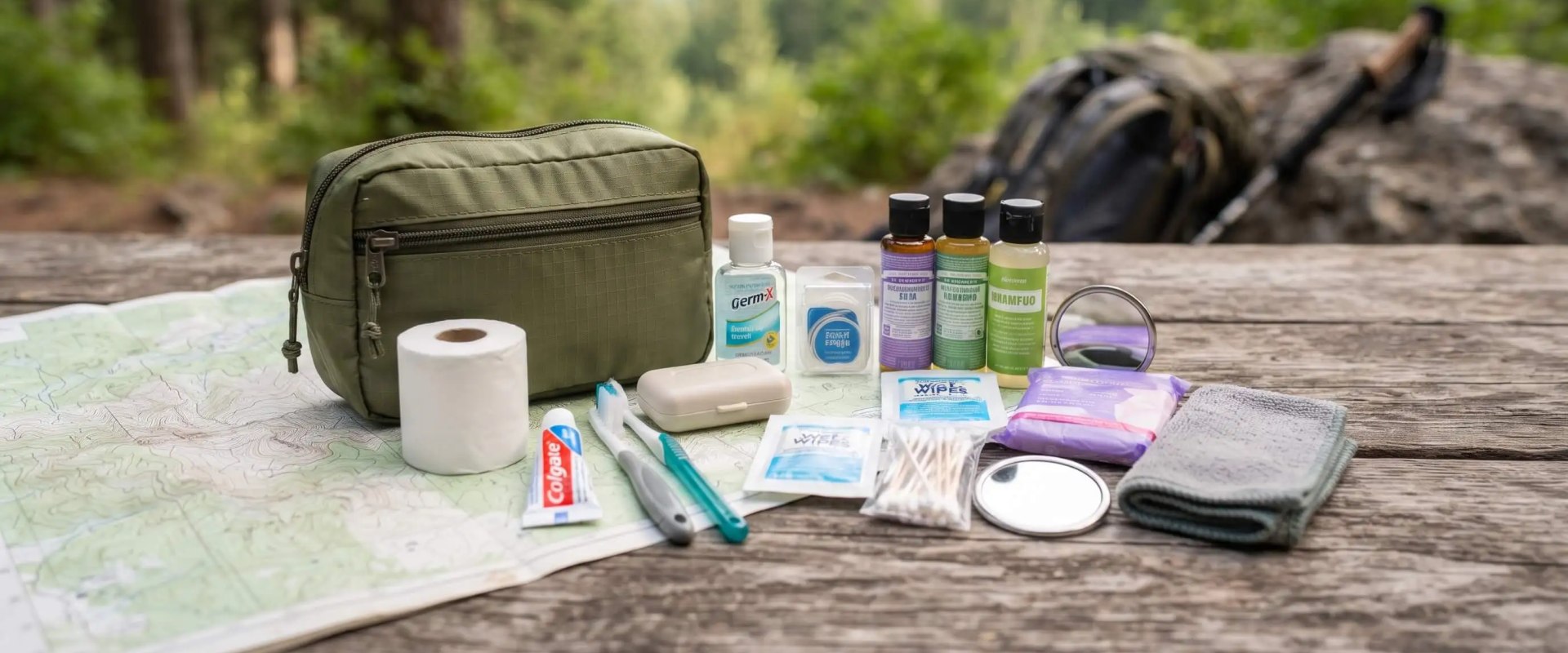
That's a packing problem, and it's an easy one to fix. Keep only what this trip needs, decant or replace your liquids, and switch to solid and rinse-free formats wherever you can. Load the whole field hygiene kit into one soft, zippered pouch with a fixed layout, then stow it high in your pack where your hand can find it fast.
If you've ever cleared off a crowded bathroom vanity, you already know the moves. Toss the duplicates and pour the big bottles into small ones. The only difference is that this "vanity" is a pouch about the size of a paperback, and it has to share a ruck with your water, food and mission gear.
The method works the same whether you're a recruit heading to basic training, a service member packing for a field training exercise, a wildland firefighter, a search and rescue volunteer or a backpacker on a long weekend.
One rule before you start. Your unit's packing list or standard operating procedure (SOP) outranks anything you read here, so use what follows inside it.
TL;DR Quick Answers
Field Hygiene Kit
A field hygiene kit is a small, soft pouch of hygiene basics you carry for training, deployment, the fireline or the backcountry, anywhere you can't count on a sink. Build it around your water budget, because drinking water comes first.
What goes in it: hand cleaner, toothbrush and toothpaste, deodorant, body wipes, foot powder, a razor, sunscreen, a quick-dry towel and trash bags.
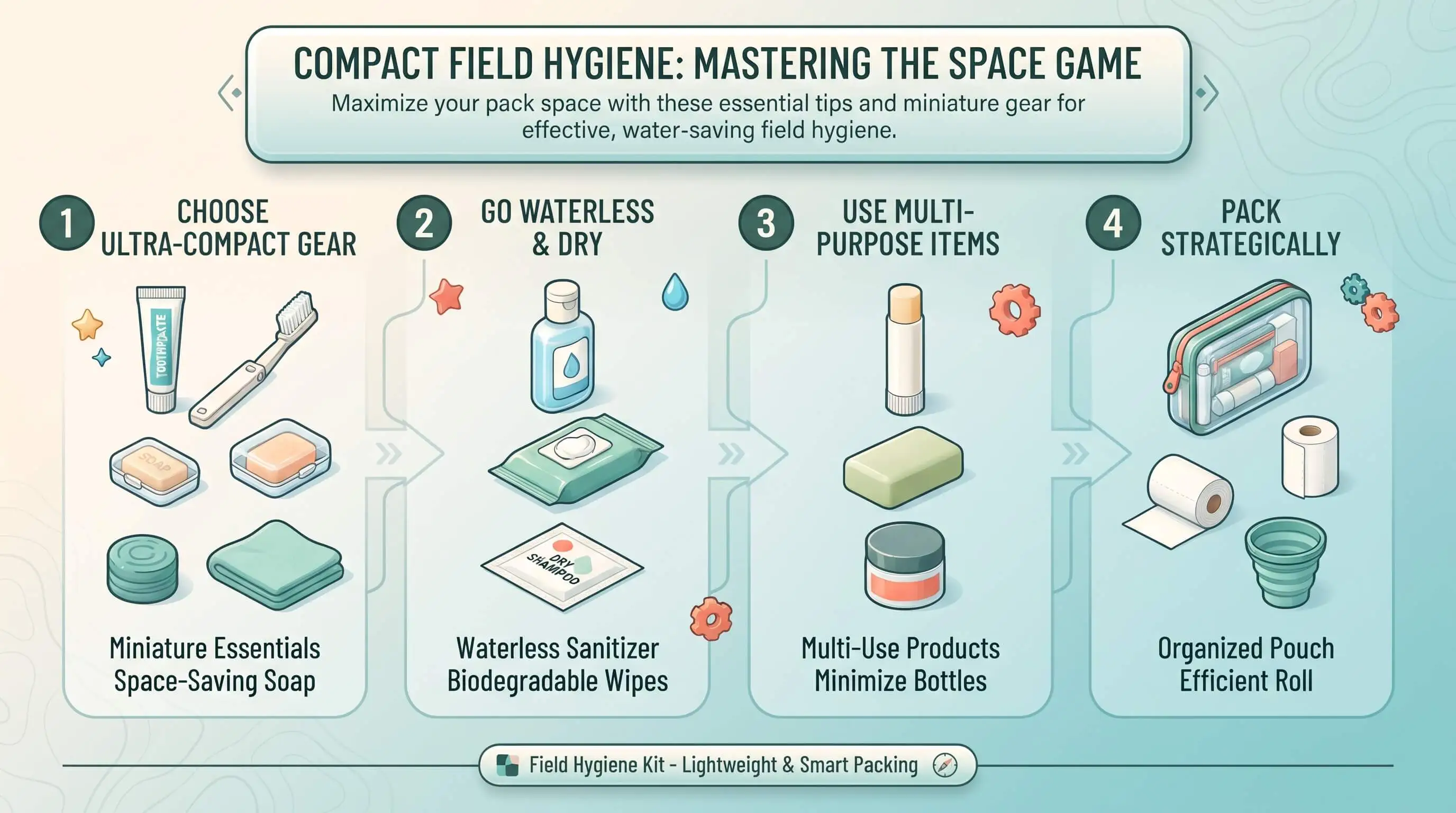
How to keep it small: decant liquids into 1 to 1.5 oz bottles, swap to solid formats and cut anything the trip won't use.
How to save water: rinse-free soap cleans hands without rinse water, so your canteen stays full.
Where it rides: high in your pack or in a lid pocket, with daily items on top.
What comes first: your unit's packing list or SOP, every time.
Top Takeaways
Your unit's list comes first. The SOP or packing list overrides any general advice, this guide included.
Pack by category, not habit. Cover hands, teeth, body, feet, sun, bugs and waste, then cut whatever doesn't earn its space.
Liquids waste the most space. Decant into 1 to 1.5 oz bottles, or switch to solid and rinse-free formats.
Rinse-free soap saves water and room. It replaces the soap-plus-rinse-water setup for hand cleaning.
One soft, zippered pouch with a fixed layout. Daily items go on top, and the kit rides high in your pack.
Why A Compact Field Hygiene Kit Matters
You'll use a kit you can carry. You'll skip one you can't.
Military medicine has a whole discipline for this, called field hygiene and sanitation, and its job is keeping people from going down for reasons that have nothing to do with combat. For most of history, bad hygiene and sanitation pulled more soldiers off the line than the enemy did.
The field stacks the odds against you. Your water budget is tight and drinking comes first. Meanwhile your hands get filthy from weapons cleaning, vehicle work, digging and eating out of an MRE pouch. When a kit is bulky and needs a sink, people leave it behind to save weight. A small one with all natural non toxic hand soap that rides in a lid pocket gets used every day.
Start With What You Actually Need
Pack by category, not by habit. Hold each item up and ask whether you'll use it on this trip.
Hands: soap or rinse-free hand cleaner, a small nail brush, nail clippers
Teeth: a compact toothbrush, toothpaste tablets or a travel tube, floss
Body: body wipes, deodorant, a quick-dry towel
Feet: foot powder and a spare pair of socks in a bag
Hair and shaving: a razor, a small shave cream or bar, dry shampoo
Sun and bugs: stick sunscreen, lip balm with SPF, insect repellent
Waste: two or three small trash bags so you can pack out used wipes and trash
Personal: feminine hygiene supplies, prescriptions, contact lens gear
Anything that does one job should lose its spot to something that does two. One bar of soap covers hands, face and body. A quick-dry towel stands in for both a washcloth and a hand towel.
Must pack: toothbrush, toothpaste, hand cleaner, deodorant, foot powder, trash bags
Nice to have: dry shampoo, a small mirror, lip balm
Leave home: full-size bottles, a cotton bath towel, an electric razor, scented sprays
Choose A Pouch That Packs Smaller Than It Holds
Go soft. A soft-shell zippered pouch about the size of a paperback bends into whatever gap is left in your pack, while a hard case wastes all four corners.
Look for a water-resistant lining, a hook or loop so you can hang it off a branch or a cot, and mesh pockets. A light-colored interior helps more than you'd think when you're digging for a toothbrush at 0400 with a red-lens headlamp. For a short exercise, a gallon freezer bag does the job and weighs next to nothing.
Swap Bulky Liquids For Space-Saving Formats
Liquids take up the most room and cause the most leaks. Solve those two and most of the work is done.
Start by decanting shampoo, body wash and lotion into 1 to 1.5 oz silicone travel bottles. Fill each one about 80% of the way, squeeze the air out, cap it and label it. Then go solid wherever you can. Shampoo bars, toothpaste tablets, stick sunscreen and bar or sheet soap all pack flat, and none of them can spill on your gear.
Rinse-Free Soap
Soap and water is still the standard when you have a wash station. Most days in the field, you won't. Hand cleaning is usually what makes a kit heavy, because the soap is only half of it and you still need water to rinse. Rinse-free soap takes the rinse water out of your water budget. You lather, rub and wipe or brush off what's left, pack out the trash, and your canteen stays full for drinking. NOWATA's guide to building a field hygiene kit walks through rinse-free hand cleaning for training and deployment, explaining how much of the best waterless hand soap to pack.
Keep alcohol hand sanitizer as your backup. It struggles on greasy or visibly dirty hands, and that describes most hands after a day in the field.
Count your wipes, too. A full 80-count pack is overkill for a three-day exercise, so pull out what you need and seal them in a smaller bag.
How To Pack Your Field Hygiene Kit, Step By Step
Give yourself about 20 minutes. Grab your items, the pouch, some travel bottles and a few zip-top bags.
Lay it all out. Spread every item on a table and check it against your unit list or the checklist below.
Cut the extras. Pull duplicates and anything this trip won't need.
Decant and swap. Move liquids into small bottles, and switch to solid or rinse-free formats where you can.
Bag the risks. Anything that could leak, or anything that has to stay dry, goes in its own zip-top bag.
Load flat and heavy first. Set flat, heavier items against the back panel of the pouch and tuck small items into the mesh pockets.
Put daily items on top. Your toothbrush, hand cleaner and soap should come out without unpacking anything else.
Compress and stow. Squeeze out the air, zip it shut and stow the kit high in your pack or in a lid pocket, away from your food and water.
Field Hygiene Kit Checklist By Trip Length
Size your consumables to the number of days you'll be out. For hand cleaners, NOWATA's planning guidance assumes about eight hand washes per person per day.
Toothbrush and toothpaste: 1 brush with tablets or a travel tube for 24 to 72 hours, 1 brush and 1 travel tube for 1 to 2 weeks, and a spare brush with 2 tubes for 30 days or more. Toothpaste tablets pack flat.
Hand cleaner: 1 small bottle for 24 to 72 hours, 1 to 2 bottles for 1 to 2 weeks, and a resupply plan for 30 days or more. Rinse-free soap saves the rinse water.
Body wipes: 1 to 2 per day on short trips, 1 per day plus a few extras for 1 to 2 weeks, and a resupply plan for 30 days or more. Count them out and re-bag them.
Deodorant: travel size for trips up to 2 weeks and a full stick for 30 days or more. Solid sticks won't leak.
Foot powder: travel size for trips up to 2 weeks and a full bottle for 30 days or more. Decant it into a small shaker.
Razor: 1 for short trips, plus spare blades for longer ones. Leave the electric razor at home.
Sunscreen and lip balm: sticks for every trip length, with a spare for 30 days or more. Sticks beat bottles.
Insect repellent: a small bottle for trips up to 2 weeks and a resupply plan for 30 days or more. Wipes pack flatter than spray.
Quick-dry towel: small for trips up to 2 weeks and medium for 30 days or more. It rolls tighter than cotton.
Trash bags: 2 for 24 to 72 hours, 4 for 1 to 2 weeks and 6 or more for 30 days or more. Fold them flat into the pouch lid.
Feminine hygiene supplies: as needed for any trip length. Bag them separately.
Space-Saving Mistakes That Bloat A Hygiene Kit
Packing full-size bottles. Decant. Every time.
Bringing a cotton bath towel. It's bulky and it stays wet for days.
Throwing in the whole wipes pack. Count what you'll use.
Leaving items loose. Loose items rattle around, leak and go missing, so bag them.
Burying the kit. At the bottom of your ruck, it won't get touched after a long day.
Keep Your Kit Packed And Ready Between Trips
When you get home, empty the pouch and let it dry out completely. Restock what you used, such as Hand soap for eczema, and check the dates on sunscreen and medications. Keep a printed checklist inside, so the next time the call comes, you can grab one pouch and go.
"Most people pack a hygiene kit like they're checking into a hotel. Full-size bottles, a thick towel, a whole pack of wipes. By day two it's sitting at the bottom of the ruck and nobody's opened it. I go the other way. The night before, I lay everything out and cut it down to what I'll use every single day, and anything that needs water gets swapped for something that doesn't. Hand cleaning is where I won't cut corners. When water's tight, rinse-free soap means I don't have to pick between clean hands before chow and a full canteen. My test is simple. If the kit fits in a lid pocket and I can find my toothbrush in the dark, I packed it right."
Essential Resources
1. Army TC 4-02.3: Field Hygiene And Sanitation
The Army wrote this training circular for Soldiers in the field and on deployment, and it covers personal hygiene, oral care and sanitation. Start here if you want to know why your unit's list looks the way it does. Read TC 4-02.3 (PDF)
2. CDC: About Handwashing
The CDC lays out when and how to wash your hands, from the 20-second scrub to what to use when you don't have soap and water. Read it to set your baseline before you cut anything from your kit. Visit CDC: About Handwashing
3. CDC: Hand Sanitizer Guidelines And Recommendations
This page spells out when sanitizer works and when it falls short. The CDC advises against using it on hands that are visibly dirty or greasy after outdoor work or camping, and it confirms the 60% minimum alcohol content to look for on the label. Visit CDC: Hand Sanitizer Guidelines
4. Defense Logistics Agency: Health And Comfort Packs
DLA lists the hygiene packs it sends to forward-deployed troops, with the contents, weight and size of each type. It's a good look at what the military treats as the core of a hygiene supply. Visit DLA: Health and Comfort Packs
5. Ready.gov: Build A Kit
FEMA's emergency supply list includes moist towelettes, garbage bags and plastic ties for personal sanitation. Use it as a cross-check if your field hygiene kit doubles as a go-bag at home. Visit Ready.gov: Build a Kit
6. Wikipedia: Leave No Trace
This summary covers all seven Leave No Trace principles, including packing out trash and hygiene products and washing at least 200 feet from lakes and streams. Backcountry users and anyone training on public land should read it. Read Wikipedia: Leave No Trace
7. USGS: How Much Water Do I Use At Home Each Day?
The U.S. Geological Survey breaks down how much water a household uses on an average day. Compare that with what you'll actually carry, and it's obvious why the sink habits don't make the trip. Visit USGS: Water Q&A
Supporting Statistics
1. Handwashing Cuts Diarrheal Illness By 23 To 40%
The CDC reports that handwashing education in the community cuts the number of people who get sick with diarrhea by 23 to 40%. Out in the field, one stomach bug can sideline you for days, and that's why hand cleaning gets the top spot in your kit. Source: CDC Handwashing Facts
2. Handwashing Reduces Respiratory Illness By 16 To 21%
The same CDC data shows handwashing reduces respiratory illnesses like colds by 16 to 21% in the general population. That number matters when you're sleeping in barracks, tents or fire camp, shoulder to shoulder with everyone else. Source: CDC Handwashing Facts
3. A Month Of Hygiene Supplies For 10 People Weighs 58 Pounds
DLA's Type I Health and Comfort Pack supplies 10 people for 30 days. It weighs 58 lbs and takes up 3.3 cubic feet. Split ten ways, that's close to 6 lbs per person per month before you trim anything, so space and weight add up fast. Source: DLA Health and Comfort Packs
Final Thoughts And Opinion
Most people overpack their hygiene kit and then barely use it. Discipline has little to do with it. The kit is heavy and buried, so it gets skipped, while a small, organized pouch in the lid pocket gets used without a second thought.
Our take: the biggest space savings hide in the water you'd otherwise spend on washing. Decanting and solid swaps help a lot, but they still leave you choosing between rinse water and drinking water. Rinse-free hand cleaning takes that choice off the table, and if you only change one thing in your kit, we'd start there.
We'd also push back on the idea that a smaller kit means cutting corners. You keep every category that protects your health, choose eco-friendly soap for camping, and drop the extras that only add weight. Pack light, keep it organized and put the pouch where your hand can find it in the dark.
Frequently Asked Questions
What should be in a field hygiene kit?
A field hygiene kit should cover your hands, teeth, body, feet, hair and shaving, sun and bug protection, and waste. The core items are hand cleaner, a toothbrush and toothpaste, deodorant, body wipes, foot powder, a razor, sunscreen, a quick-dry towel and trash bags. Check your unit's packing list before you buy anything.
How do you make a hygiene kit smaller?
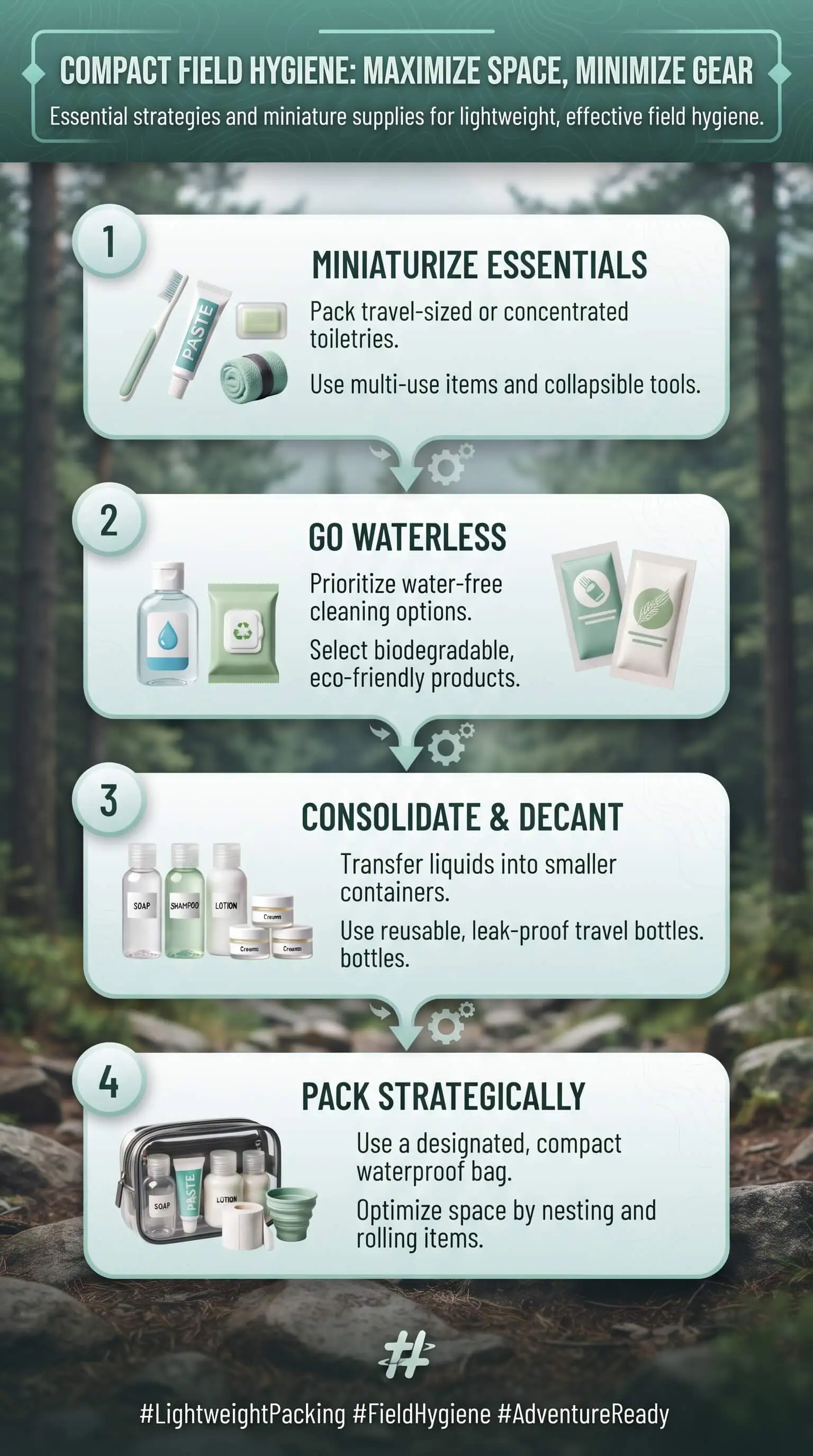
Cut the duplicates and anything this trip won't need, then decant liquids into small travel bottles. Swap to solid formats like shampoo bars and toothpaste tablets, and use rinse-free soap for hand cleaning. Pack it all into one soft pouch that bends to fit your pack.
What size bag is best for a field hygiene kit?
For most trips, a soft-shell zippered pouch about the size of a paperback works well. Look for a water-resistant lining, mesh pockets and a hang loop. On a short exercise, a gallon freezer bag is a light, cheap option.
How do you keep a hygiene kit from leaking in your pack?
Fill travel bottles about 80% of the way, squeeze out the air and cap them tight. Give each liquid its own zip-top bag. Your best bet is swapping liquids for solids wherever you can.
Can you stay clean in the field without water?
Yes. Rinse-free soap, body wipes and dry shampoo let you clean up without a sink. Keep alcohol hand sanitizer as a backup, since the CDC advises against relying on it when your hands are visibly dirty or greasy.
How long will a field hygiene kit last?
That depends on how many days you're out and how often you wash. Size hand cleaner and wipes to your trip length, plan for several hand washes a day and restock after every trip.
Where should a hygiene kit go in a ruck or assault pack?
Pack it high in your pack or in a lid pocket so you can reach it without unloading. Keep it on the opposite side from your food and water.
Pack It Tonight, Not The Night Before You Leave
Don't wait for the packing list to hit your inbox. Lay your gear out tonight, run it against the checklist above and cut it down to one pouch. Then weigh it. Most people get back more room than they expect.
If you want clean hands without spending your drinking water, start with rinse-free hand cleaning. Our guides on waterless soap for sensitive skin and choosing soap for frequent handwashing are good next reads.
What's the one item you never leave out of your field hygiene kit? Tell us in the comments.